
The pidyon haben (Hebrew: פדיון הבן) or redemption of the first-born son is a mitzvah (commandment) in Judaism whereby a Jewish firstborn son is “redeemed” with money.
According to the Torah (Hebrew Bible) God intended for the first-born of each Jewish family to be a Kohen – i.e. that family’s representative to the Holy Temple. (Exodus 13:1-2, Exodus 24:5 with Rashi). But then came the incident when Moses went up Mount Sinai, and the Israelites, fearing he would not return, built a Golden Calf. When Moses came down from Mount Sinai and saw this, he smashed the tablets and issued everyone an ultimatum: “Make your choice – either God or the idol” (Exodus 32:26). Only the tribe of Levi came to the side of God. At that point, God decreed that each family’s first-born would forfeit their “Kohen” status – and going forward all the Kohanim would come from the tribe of Levi. (Numbers 3:11-12).
This brings us to the mitzvah (commandment) of Pidyon Ha’Ben. Since the first-born child is technically a “Kohen” whose potential cannot be actualized, he has to be replaced (so to speak) by a Kohen from the tribe of Levi. This is accomplished by the father of the baby offering the Kohen a redemptive value of five silver coins for the boy.
Meaning and Significance
Contents
The Ceremony
We redeem the first born boy by paying five silver coins to a Kohen (a patrilineal descendant of the priestly family of Aaron), on behalf of one’s firstborn son. Another object of equivalent value may also be used.
Pidyon haben is a relatively rare ceremony. A family does NOT perform the ceremony if its firstborn is either a girl, or born by caesarean section, or preceded by a miscarriage, or if either grandfather is a Kohen or a Levite.
This redemption ceremony is performed when at least thirty days have passed since the child’s birth. If the 31st day falls on Shabbat or a festival, the redemption is delayed, because any sort of business transaction is not allowed on those days. The elapsed days are counted from sunset to sunset, and the day of birth counts as the first day. While the redemption could be performed immediately after dark on the 31st night, it is usually done the next day; but if the 31st day is a fast day, it is done the previous night, so that it can be accompanied by a festive meal. It is also possible to hold the ceremony on the 30th day itself, if it will be impossible to perform it the next day, so long as at least one synodic month has passed since the moment of birth.
If a first-born son reaches bar mitzvah age without having been redeemed, he is responsible for arranging the mitzvah himself as soon as possible.
Order of the Ceremony
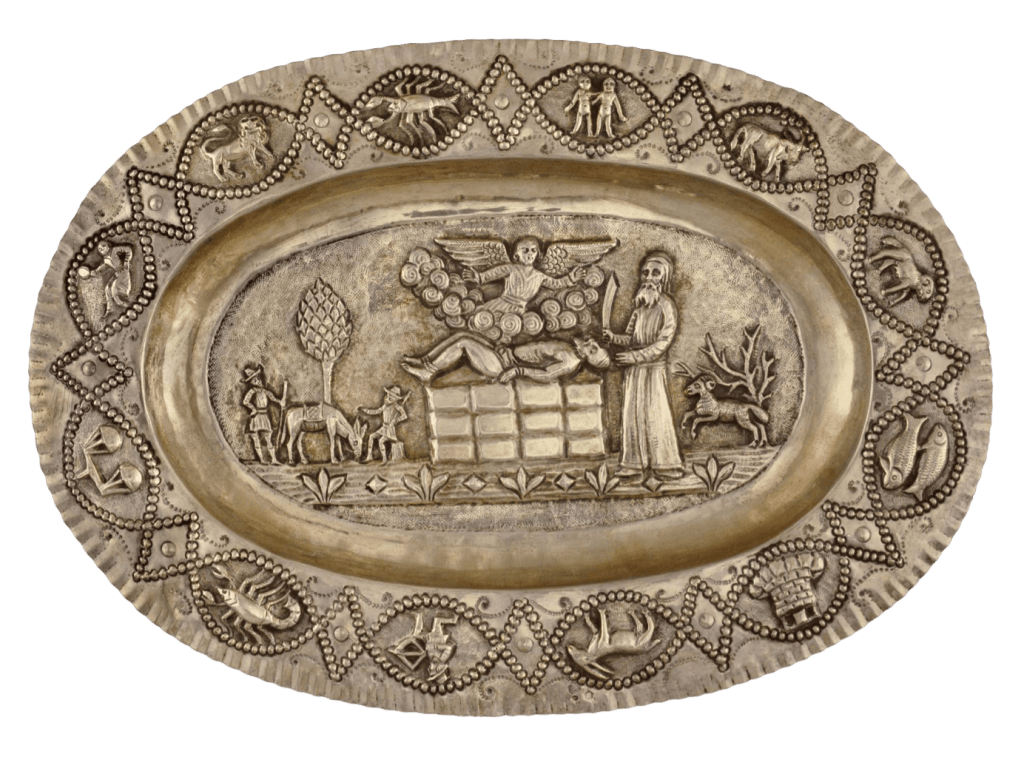
The ceremony traditionally takes place before a minyan of 10 men in either a synagogue or a home. It is essential that the child, the parents and the kohen are present. Family and friends are welcome to attend as well. The child is sometimes presented on a silver tray, surrounded by jewellery lent for the occasion by women in attendance. This is to contrast with the golden calf, when gold and jewellery was used for a sinful purpose.
Sephardic Pidyon Haben Text
The kohen takes the child from the mother and asks the father:
בִּנְךָ זֶה בְּכוֹר הוּא
This son of yours, is he a first born?
The father answers:
כֵּן
Yes
The kohen asks:
בְּמַאי בָּעִית טַפֵי בְּבִנְךָ בְכוֹרֶךָ אוֹ בַּחֲמִשָּׁה סְלָעִים דִּמְחַיַּבְתְּ לִפְדּוֹת בָּהֶן
Which would you rather have—your firstborn son, or the five coins with which you are obligated to redeem [your son]?
The mother answers:
זֶה בְּנִי בְכוֹרִי. לא יָלַדְתִּי וְלא הִפַּלְתִּי לְפָנָיו
This is my firstborn son. I’ve not given birth or miscarried before him.
The kohen then proclaims:
זֶה הַבֵּן בְּכוֹר הוּא, וְהַקָּדוֹשׁ בָּרוּךְ הוּא צִוָּה לִפְדוֹתוֹ שֶׁנֶּאֱמַר וּפְדוּיָו מִבֶּן חדֶשׁ תִּפְדֶּה בְּעֶרְכְּךָ כֶּסֶף חֲמֵשֶׁת שְׁקָלִים בְּשֶׁקֶל הַקּדֶשׁ. עֶשְׂרִים גֵּרָה הוּא
כְּשֶׁהָיִיתָ בִּמְעֵי אִמֶּךָ הָיִיתָ בִּרְשׁוּת אָבִיךָ שֶׁבַּשָּׁמַיִם וּבִרְשׁוּת אָבִיךָ וְאִמֶּךָ. עַכְשָׁיו אַתָּה בִּרְשׁוּתִי שֶׁאֲנִי כהֵן וְאָבִיךָ וְאִמֶּךָ מְבַקְּשִׁים לִפְדּוֹתְךָ שֶׁאַתָּה בְּכוֹר מְקֻדָּשׁ, שֶׁכֵּן כָּתוּב וַיְדַבֵּר ה’ אֶל משֶׁה לֵּאמר קַדֶּשׁ לִי כָל בְּכוֹר פֶּטֶר כָּל רֶחֶם בִּבְנֵי יִשְׂרָאֵל בָּאָדָם וּבַבְּהֵמָה לִי הוּא
This son is a firstborn, and the Holy One, blessed be He, commanded to redeem him. As it is stated, “Its redemption [shall be performed] from the age of a month, according to the valuation, five shekels of silver, according to the holy shekel, which is twenty gerahs.”
When you were in your mother’s womb, you were under the jurisdiction of your Father in heaven, and under the jurisdiction of your father and mother. Now, you are under my jurisdiction, for I am a kohen, and your father and mother wish to redeem you, for you are a sanctified firstborn. For so it says: “And Gd spoke to Moses, saying: ‘Sanctify to Me all firstborn, all who open the womb amongst the children of Israel, both man and beast, belong to Me.'”
The father lifts the money and tells the kohen:
אֲנִי רוֹצֶה לִפְדּוֹתוֹ שֶׁכַּךְ כָּתוּב בַּתּוֹרָה אַךְ פָּדה תִפְדֶּה אֵת בְּכוֹר הָאָדָם. וּפְדוּיָו מִבֶּן חדֶשׁ תִּפְדֶּה בְּעֶרְכְּךָ כֶּסֶף חֲמֵשֶׁת
שְׁקָלִים בְּשֶׁקֶל הַקּדֶשׁ. עֶשְׂרִים גֵּרָה הוּא
I wish to redeem him, for so it says in the Torah: “Surely you shall redeem the firstborn of man. Its redemption [shall be performed] from the age of a month, according to the valuation, five shekels of silver, according to the holy shekel, which is twenty gerahs.”
לְשֵׁם יִחוּד קוּדְשָׁא בְּרִיךְ הוּא וּשְׁכִינְתֵּיהּ, בִּדְחִילוּ וּרְחִימוּ וּרְחִימוּ וּדְחִילוּ, לְיַחֲדָא שֵׁם יוֹ”ד קֵ”י בְּוָא”ו קֵ”י בְּיִחוּדָא שְׁלִים (יהוה)
בְּשֵׁם כָּל יִשְׂרָאֵל. הִנֵּה אָנכִי בָּא לְקַיֵּם מִצְוַת עֲשֵׂה שֶׁל פִּדְיוֹן בְּכוֹר, כְּמוֹ שֶׁכָּתוּב וְכל בְּכוֹר אָדָם בְּבָנֶיךָ תִּפְדֶּה. וּכְתִיב וּפְדוּיָו מִבֶּן חדֶשׁ תִּפְדֶּה בְּעֶרְכְּךָ כֶּסֶף חֲמֵשֶׁת שְׁקָלִים בְּשֶׁקֶל הַקּדֶשׁ. עֶשְׂרִים גֵּרָה הוּא. וְיַעֲלֶה לְפָנֶיךָ כְּאִלּוּ קִיַּמְתִּיהָ בְּכָל פְּרָטֶיהָ וְדִקְדּוּקֶיהָ וְכַוָּנוֹתֶיהָ וְתַרְיַ”ג מִצְוֹת הַתְּלוּיוֹת בָּהּ וּלְתַקֵּן אֶת שָׁרְשָׁהּ בְּמָקוֹם עֶלְיוֹן. לַעֲשׂוֹת נַחַת רוּחַ לְיוֹצְרֵנוּ וְלַעֲשׂוֹת רְצוֹן בּוֹרְאֵנוּ. וִיהִי נעַם אֲדנָי אֱלהֵינוּ עָלֵינוּ. וּמַעֲשֵׂה יָדֵינוּ כּוֹנְנָה עָלֵינוּ. וּמַעֲשֵׂה יָדֵינוּ כּוֹנְנֵהוּ
Blessed are You, L-rd our Gd, King of the Universe, who has sanctified us with His commandments and commanded us concerning the redemption of a son.
בָּרוּךְ אַתָּה ה’, אֱלהֵינוּ מֶלֶךְ הָעוֹלָם, שֶׁהֶחֱיָינוּ וְקִיְּמָנוּ וְהִגִּיעָנוּ לַזְּמַן הַזֶּה
Blessed are You, L-rd our Gd, King of the Universe, who has granted us life, sustained us and enabled us to reach this occasion.
He hands the money to the kohen, saying:
זֶה פִּדְיוֹן בְּנִי בְכוֹרִי
This is the redemption [money] for my firstborn son
The kohen receives the money and says:
קִבַּלְתִּי מִמְּךָ חֲמִשָּׁה סְלָעִים אֵלּוּ בְּפִדְיוֹן בִּנְךָ זֶה. וַהֲרֵי הוּא פָּדוּי בָּהֶן כְּדַת משֶׁה וְיִשְׂרָאֵל
I’ve received from you these five coins, for the redemption of this son of yours. He is now redeemed with them, according to the rules of Moses and Israel
יְהִי רָצוֹן מִלְּפָנֶיךָ ה’ אֱלהֵינוּ וֵאלהֵי אֲבוֹתֵינוּ, כְּשֵׁם שֶׁזָּכָה הַבֵּן הַזֶּה לַפִּדְיוֹן, כָּךְ יִזְכֶּה לַתּוֹרָה וְלַמִּצְוֹת וְלַחֻפָּה בְּחַיֵּי
אָבִיו וּבְחַיֵּי אִמּוֹ, אָמֵן כֵּן יְהִי רָצוֹן
May it be Your will, Lord our Gd and Gd of our fathers, that just as this boy merited redemption, may he also merit to [study] Torah, mitzvot, and [to enter] the wedding canopy—in his father’s and mother’s lifetime. Amen! May this be [Your] will!
Lifting the glass of wine, the kohen says:
בָּרוּךְ אַתָּה יְהֹוָה אֱלֹהֵינוּ מֶלֶךְ הָעוֹלָם. בּוֹרֵא פְּרִי הַגָּפֶן
Blessed are You, L-rd our Gd, King of the Universe, who created fruit of the vine.
The festive meal commences, followed by Grace After Meals.
Differences Between a Sephardi and Ashkenazi Pidyon haBen
In summary:
- Sephardim have a custom that the Kohen takes a Hadas – Myrtle leaves – and makes a Bracha (blessing) of Borei Atzel Besamim (who has commandment me to smell)
- The Sephardi custom is that the Kohen holds the baby. The Ashkenazi custom is that the baby is placed in front of the Kohen.
Ashkenazim for the most part do the Pidyon only in the dayime. Sephardim do the Pidyon in the evening also.

Rebecca Amato Levy’s reflections on Rehmido or Pidyon as it was practiced in Rhodes
If the first son was born to a family where neither parent was a Cohen or Levy, and there were no previous miscarriages, then a rehmido, redemption, was performed.
According to our tradition, this first son belongs to the priesthood. Even though the child remains with his mother, for the first month he belongs in spirit to the Cohanim until the Rehmido is performed. The son’s father must then redeem his son by paying five pieces of silver to a Cohen.
On the 31st day of the child’s life, a party was given at home. The ceremony was a festive occasion. Family and friends were invited to attend and there was a large celebration, with much food, drink and singing of songs. One of the Cohanim would take the child from his mother’s arms and say, “According to our laws and customs, this child belongs to God.” During this time, while the Cohen held the baby, the friends who have gathered, sang special songs. The baby’s father placed five coins on a tray. The Cohen asked: “Do you want the child or the money?” The father extended his arms to receive the child. The Cohen repeated his question and the father replied again, “yes,” he wanted his son and not the money.
According to our tradition, in a family of four consecutive generations of firstborn boys (Behorim), the child is exempt from the Rehmido as this is considered a natural-born blessing.
If the first son was born to a family where neither parent was a Cohen or Levy, and there were no previous miscarriages, then a rehmido, redemption, was performed.
According to our tradition, this first son belongs to the priesthood. Even though the child remains with his mother, for the first month he belongs in spirit to the Cohanim until the Rehmido is performed. The son’s father must then redeem his son by paying five pieces of silver to a Cohen.
On the 31st day of the child’s life, a party was given at home. The ceremony was a festive occasion. Family and friends were invited to attend and there was a large celebration, with much food, drink and singing of songs. One of the Cohanim would take the child from his mother’s arms and say, “According to our laws and customs, this child belongs to God.” During this time, while the Cohen held the baby, the friends who have gathered, sang special songs. The baby’s father placed five coins on a tray. The Cohen asked: “Do you want the child or the money?” The father extended his arms to receive the child. The Cohen repeated his question and the father replied again, “yes,” he wanted his son and not the money.
According to our tradition, in a family of four consecutive generations of firstborn boys (Behorim), the child is exempt from the Rehmido as this is considered a natural-born blessing.
Additional Resources
Audio link to the text of the Pidyon haBen
net-sah.org
SCA Minhag of the Week 130: “The Pidyon HaBen Ceremony”
YouTube Channel: SCA Updates
Episode 130: “The Pidyon Haben Ceremony”
Facebook Page: Sephardic Community Alliance – SCA Updates
Audio link to the text of the Pidyon haBen
net-sah.org
SCA Minhag of the Week 130: “The Pidyon HaBen Ceremony”
YouTube Channel: SCA Updates
Episode 130: “The Pidyon Haben Ceremony”
Facebook Page: Sephardic Community Alliance – SCA Updates
Sources and References
- “Sephardic Text”. Chabad.org. Available at: https://www.chabad.org/library/article_cdo/aid/929244/jewish/Sephardic-Text.htm.
- “Pidyon Haben”. Wikipedia. Available at: https://en.wikipedia.org/wiki/Pidyon_haben.
- Rebecca Amato Levy, I Remember Rhodes (1987).