
Contents
The Origins of Ladino Music
Sephardic music has its roots in Jewish tradition and the homeland of the Sephardim, the Iberian Peninsula. But as Sephardic Jews settled elsewhere, influences from those other countries became intertwined in traditional Ladino music. The lyrics of many of the songs were preserved and passed down through generations, but as they moved to different parts of the world, rhythms and melodies were lost and changed. In the Ottoman Empire, specifically, there was a policy of religious freedom, which allowed for the Sephardic Jews who settled there to preserve their culture, language, and songs over time.
At the time of the Inquisition, Ladino music was heavily influenced by the themes of Spanish ballads. These songs often told stories of heroes, knights, pain, loss, and romance, but overtime came to tell of more general themes like relationships, gossip, and other common life occurrences. Ladino songs were traditionally sung by women, often while doing work around the house, without any accompanying singers or instruments. In performances, weddings for example, percussion instruments were sometimes used. Instrument choice in Ladino music has often been influenced by the culture of the country in which it was performed.
The themes of the Ladino songs were numerous. Some referred to kings and queens and the life of royalty. Some carried religious lessons and cited moral values. Many related to major events such as birth, marriage and death. Others sang of love, happiness and sadness. Some were humorous, others mournful. In the dull, gray-brown atmosphere of the Juderia, Rhodes Jews sang songs which lifted their imaginations from their surroundings and which gave their everyday emotions added poignancy.
Themes of the Songs
In many of the popular romances the themes were not specifically religious. Pious Jews and Jewesses did not blush while singing songs of passionate love, even songs which reflected immoral behaviour. One of the songs (El Rey Por Muncha Madruga) tells of a king who came into the queen’s room while she was combing her hair early one morning. She had been expecting her lover and was so busy with her grooming, she did not realize that it was the king who had come. Thinking that her lover was in the room, she proceeded to tell him that she had two sons by the king and two by the lover, and the latter were treated far better than the former. After making this fatal admission, she turned around and saw the king. She quickly made up the excuse that she had been having a strange dream. But the king was not deceived by the queen’s cleverness. He ordered that she be beheaded at daybreak. The words of this song can be found here.
Another song (Tres Hijas Tiene el Buen Rey) tells of the immoral desire of a king for his youngest daughter. One touching romance describes the conversation of a mother and her daughter. The young girl has a sprig of ruda (a fragrant green plant) and flower in her hand. The mother asks where she got them. The daughter answers that they were a gift from a young man who is in love with her. The mother then warns the daughter that she should not lead a life of sin, that a bad husband is better than a new love. The daughter argues that the new love deserves more than a bad husband, and she maintains her devotion to her lover. The mother pleads for the daughter to repent, not to let herself be lost “among the 70 nations,” i.e., not to be lost to the Jewish people.
Many songs expressed love or the anguish of unrequited love. One of the most popular love songs (Durme) has a lover telling his woes—he sleeps neither day nor night, he suffers due to his beloved’s apparent indifference. He asks her to look him in the face; if she will not do even that, he wishes to die.
Romance Songs
The very fact that these poems of love could be sung comfortably by Jews deeply dedicated to their religion and strict in their observance of Jewish law is a reflection of the religious culture of Sephardic Jewry. The Sephardim of Rhodes and elsewhere had a broad outlook on life. They saw no sharp conflicts between the teachings of religion and the singing of the romances. Love was part of the human experience and, therefore, a perfectly appropriate theme for songs. It is not insignificant that Chief Rabbi Reuben Eliyahu Israel, in his volume of the Pirkei Abot, includes a series of maxims dealing with women, love and marriage. For Jews of other traditions, such openness on these topics might have seemed irreverent. But for the Sephardim of Rhodes and elsewhere, this seemed only natural.
The songs had other important ramifications. They kept the Sephardic imagination and sense of beauty alive and active. Shoemakers and street-porters, merchants and peddlers, housewives and tired grandmothers were able to rise above the tedium of their daily drudgery.
Their songs did not bewail their poverty or make them feel sorry for themselves. Rather, the music tended to reach outward, giving fresh visions and opening different mental images. New songs were composed in the spirit of the old. The senses of poetry and imagery were nourished and bore fruits. The tradition of singing helped the Sephardim remain optimistic and happy in spite of the relatively poor settings in which they lived.
Broad Outlook on Life
One other aspect should also be noted. The Ladino songs reflected and influenced the Sephardic appreciation of graceful behaviour and good manners. In one song, for example, a daughter asks her mother’s permission to go to Venice to be with her love. The mother informs her daughter that the trip is difficult, and that there are no relatives along the way who might help her. She also reminds her that it is not proper for a young woman to be brazen, to chase after a man. “For one who wishes to become a married woman, it is not proper to be a traveller on the streets; but rather she should be pretty and very nimble in winking to make a good appearance. Other songs described the honour and grace which obtain among cosuegros, the parents of the bride and groom.
Music Reflecting Values
The romance tradition was particularly vibrant among the Jews of Rhodes. Alberto Hemsi noted the astonishing fidelity of the Rhodeslis to the Spanish poetic and musical heritage. Professors Armistead and Silverman (writing in the 1960’s) found that the Sephardim of Rhodes preserved the old Spanish romances in vitality, more so than Sephardim of the cities in Turkey. In the mid 20th century it was observed that Jewish women of Rhodes origin, aged 45-55, could sing in general fifteen romances; the older women knew many more. By contrast, among the old women of Istanbul it was difficult to find one who knew more than three or four.
One of the reasons for the unusual ability of the Jews of Rhodes to preserve the ancient romances was their genuine love of singing. In addition, one of their general cultural characteristics was a concern for detail and precision. Since the romances were often sung at family gatherings and public celebrations, the singers and audiences could check one another and would correct any deviations from the traditional words and/or melodies. The community was relatively small in number and closely-knit, factors which also tended to strengthen their cultural traditions.
Rhodeslis and the Romance Tradition
Over time, Ladino music has evolved and flourished, combining modern and contemporary influences with the traditional lyrics and melodies. Artists, continue to work to preserve the Ladino language and stories by focusing on music. Many Sephardic artists would converse with native Ladino speakers to turn the oral tradition to written and recorded works that could be saved for future generations. Below is a sample of some of this work. The range of genres is breathtaking and inspiring.
Ladino Music Today
Alberto Hemsi
Alberto Hemsi was a 20th century composer born in Turkey, dedicated his life’s work to collecting and promoting the music of the Sephardic Jews. As a way to preserve the oral tradition of Ladino music, Hemsi began collecting the songs and lyrics of his family and friends from his surrounding Sephardic community. Later in his career he went on extensive excursions to the former Ottoman Empire to expand his collection of Ladino music.
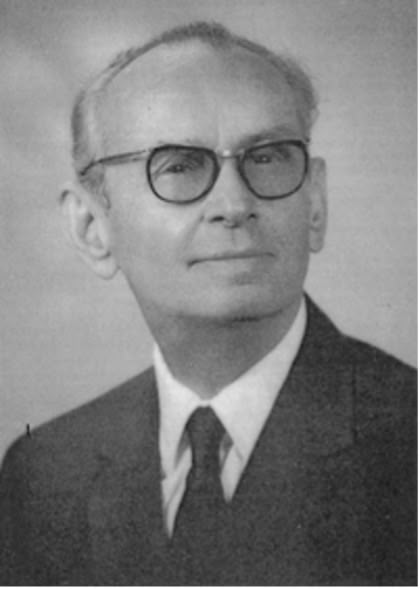
Hemsi, Alberto, and Seroussi, Edwin. Cancionero Sefardí. The Jewish Music Research Centre, the Hebrew University of Jerusalem, 1995.
Judy Frankel was an American Jew of Ashkenazi origin who dedicated her life to performing Sephardic music in the Ladino language, and came to be known as one of the leading interpreters of traditional Sephardic music. After relocating to San Francisco, Frankel began interviewing members of the Jewish Community in the Bay Area in order to collect the traditional folk songs of the Sephardic Jews While performing the songs in Ladino, Frankel would give audiences an English translation of the lyrics, in addition giving credit to the individual who passed the material down to her. Listen here.
- There are a number of groups in Turkey that sing in Judeo-Spanish, notably Janet & Jak Esim Ensemble, Los Pasharos Sefaradis and the children’s chorus Las Estreyikas d’Estambol
- A Brazilian-born singer of Sephardic origins, Fortuna, who researches and plays Judeo-Spanish music both for children and for adults.
- Israeli folk duo Esther & Abi Ofarim recorded the song “Yo M’enamori d’un Aire” for their 1968 album Up To Date.
- Additionally Esther Ofarim recorded several Judaeo-Spanish songs as a solo artist. These included Povereta Muchachica, Noches Noches, El Rey Nimrod, “Adio Querida” and Pampaparapam.
- Liliana Benveniste was born in Buenos Aires, Argentina. She is a teacher, singer, and composer, and has dedicated her life to compiling, recreate, and promote Sephardi culture during the last 20 years, teaching the language, traditions, and songs that stem from the rich Sephardi traditions. Her website and music can be found here.
- The Jewish Bosnian-American singer, Flory Jagoda, was a musician and composer who widely promulgated and enriched the Sephardic musical tradition in the United States. She was taught by her grandmother, a Sephardic folk singer and musician.
- The cantor, Ramón Tasat, who learned Judeo-Spanish at his grandmother’s knee in Buenos Aires, has recorded many songs in the language, with three of his CDs focusing primarily on that music.
- The Israeli singer Yasmin Levy has also brought a new interpretation to the traditional songs by incorporating more “modern” sounds of Andalusian Flamenco. Her work revitalising Sephardic music has earned Levy the Anna Lindh Euro-Mediterranean Foundation Award for promoting cross-cultural dialogue between musicians from three cultures:
In Yasmin Levy’s own words:
I am proud to combine the two cultures of Ladino and flamenco while mixing in Middle Eastern influences. I am embarking on a 500-year-old musical journey, taking Ladino to Andalusia and mixing it with flamenco, the style that still bears the musical memories of the old Moorish and Jewish-Spanish world with the sound of the Arab world. In a way, it is a ‘musical reconciliation’ of history.
- Nani Vazana is an Israeli artist who writes and composes new songs in the Ladino and performs all over the world.
- Notable music groups performing in Judeo-Spanish include Voice of the Turtle, and Vanya Green who was awarded a Fulbright Fellowship for her research and performance of this music. She was recently selected as one of the top ten world music artists by the We Are Listening International World of Music Awards for her interpretations of the music.
- Robin Greenstein, a New York-based musician, received a federal CETA grant in the 1980s to collect and perform Sephardic Music under the guidance of the American Jewish Congress. Her mentor was Joe Elias, a noted Sephardic singer from Brooklyn. She recorded residents of the Sephardic Home for the Aged, a nursing home in Coney Island, New York, singing songs from their childhood. The voices recorded included Victoria Hazan, a well-known Sephardic singer who recorded many 78s in Judeo-Spanish and Turkish from the 1930s and 1940s. Two Judeo-Spanish songs can be found on her Songs of the Season holiday CD, released in 2010 on Windy Records.
- German band In Extremo also recorded a version of the above-mentioned song Avram Avinu.
- The Israeli-German folk band Baladino has released two albums that have songs with lyrics in Judeo-Spanish.
- Jennifer Charles and Oren Bloedow from the New York-based band Elysian Fields released a CD in 2001 called La Mar Enfortuna, which featured modern versions of traditional Sephardic songs. A few of their live performances can be found here:
- The American singer Tanja Solnik has released several award-winning albums that feature songs in Hebrew, Yiddish and Ladino: From Generation to Generation: A Legacy of Lullabies and Lullabies and Love Songs.
A number of other artists singing in Ladino can be found at https://www.last.fm/tag/ladino/artists
Lullabies, songs sung usually by women to help their children fall asleep are universal.
Dume Dume is a popular ladino lullaby that has been recorded in many forms including these beautiful ones below.
Ladino Lullabies
A lullaby sung by a father:
A la nana y a la buba
Se durma la kriatura.
El Dio grande ke los guardre A los ninyos de los males.
A lullaby plus loving arms
and the infant sleeps.
May G-d preserve all children from harm.
A lullaby sung by a father:
https://www.youtube.com/watch?v=Lm0lioizpEs
Lyrics
Durme durme hijiko de madre
Sleep, sleep little son of your mother
Durme durme hijiko de madre
Sleep, sleep little son of your mother
Durme durme hijiko de madre
Sleep, sleep little son of your mother
Siente siente las palavrikas de tu padre
Listen listen to the words of your father
Las palavras de Shma Yisrael
The words of ‘Shma Yisrael’
Las palavras de Shma Yisrael
The words of ‘Shma Yisrael’
Durme durme hijiko de madre
Sleep, sleep little son of your mother
Kon hermosura de Shma Yisrael
Sleep, sleep little son of your mother
Kon hermosura de Shma Yisrael
Sleep, sleep little son of your mother
Durme, durme, mi andjeliko
Sleep, sleep my little angel,
hijiko chiko de tu nasion
Little son of your people
Kriatura de Sión
Infant of Zion
No konoses la dolor
May you never know pain.
Por ke nombre, ah me demandas
Why do you ask for my name?
Por ke no kanto yo?
Why am I not singing?
Ah, kortaron las mis alas
Ah, my wings have been clipped
I mi boz amudisió
And my voice has been silenced,
Ah, el mundo de dolor
Oh, the world of pain.
Durme durme hijiko de madre
Sleep, sleep little son of your mother
Durme durme hijiko de madre
Sleep, sleep little son of your mother
Durme durme hijiko de madre
Sleep, sleep little son of your mother
Siente siente las palavrikas de tu padre
Listen listen to the words of your father
Las palavras de Shma Yisrael
The words of ‘Shma Yisrael’
Las palavras de Shma Yisrael
The words of ‘Shma Yisrael’
Durme durme hijiko de madre
Sleep, sleep little son of your mother
Kon hermosura de Shma Yisrael
Sleep, sleep little son of your mother
Kon hermosura de Shma Yisrael
Sleep, sleep little son of your mother
Durme, durme, mi andjeliko
Sleep, sleep my little angel,
hijiko chiko de tu nasion
Little son of your people
Kriatura de Sión
Infant of Zion
No konoses la dolor
May you never know pain.
Por ke nombre, ah me demandas
Why do you ask for my name?
Por ke no kanto yo?
Why am I not singing?
Ah, kortaron las mis alas
Ah, my wings have been clipped
I mi boz amudisió
And my voice has been silenced,
Ah, el mundo de dolor
Oh, the world of pain.
A Sephardic lullaby, liked Nani Nani sung by Rudi Gabriel Bedy:
https://www.youtube.com/watch?v=oRiBFydSNrE
Lyrics
Nani Nani Nani,
Nani Nani Nani
Nani que era el hijo
Nani who was the son,
el hijo de la madre,
the son of the mother,
de chico se haga grande,
from small may he grow
Ay,
Ay
ay durmite mi alma,
ay sleep my soul,
que tu padre viene
your father comes
con mucha alegría
full of joy
Nani Nani Nani,
Nani Nani Nani
Nani que era el hijo
Nani who was the son,
el hijo de la madre,
the son of my mother,
de chico se haga grande
from small may he grow
Nani Nani Nani,
Nani Nani Nani
Nani que era el hijo
Nani who was the son,
el hijo de la madre,
the son of the mother,
de chico se haga grande,
from small may he grow
Ay,
Ay
ay durmite mi alma,
ay sleep my soul,
que tu padre viene
your father comes
con mucha alegría
full of joy
Nani Nani Nani,
Nani Nani Nani
Nani que era el hijo
Nani who was the son,
el hijo de la madre,
the son of my mother,
de chico se haga grande
from small may he grow
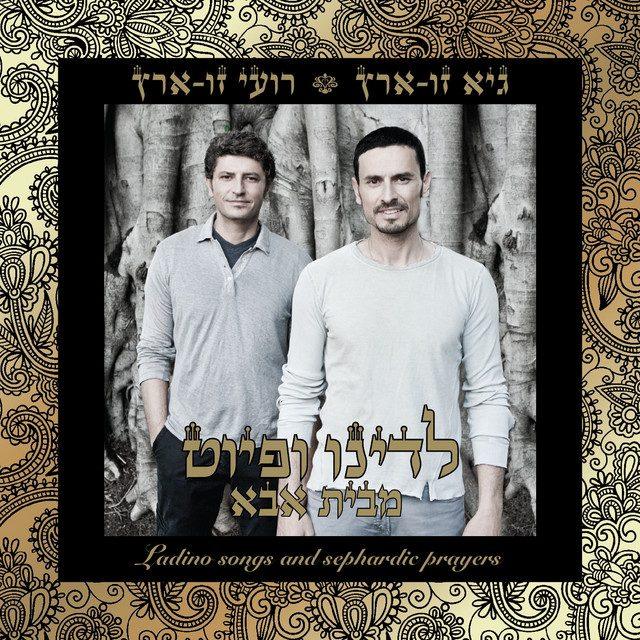
Ladino Albums

Additional Resources
I Remember Rhodes
Rebecca Amato Levy, 1987, has a chapter on Ladino Songs in both Ladino and English
Music remembering the Jews of Rhodes
Robinovitch’s Sefarad
The Jewish Community Of Rhodes
Cantigas E Romances In Judeo-Español
Ladino Music Today as a Tool of Storytelling and Preservation
Curated by Laurel Comiter, Gabriel Mordoch, and Gabriel Duque
La Galana
A Very Old-New Sephardic Song
El Sueño de la Hija del Rey
Sephardic Ladino Song (video shot in Rhodes)
We sing and remember
Ladino songs from the Jewish Community of Rhodes
Ladino Songs & the Sephardic Diaspora
Under Aegean Moons: Music of the Spanish Jews of Rhodes and Salonika
Ladino Song Project
A database of Ladino song original lyrics translated into English. It is online, free for anyone to use. It was created by Gerard Edery, who has been involved in performances, recordings and research of the Sephardic Song repertory, of which Ladino Songs is the most important part, for over 20 years. He has accumulated a vast library of manuscripts, rare songbooks, romanceros (a collection of romantic Sephardic ballads, poems and songs) and sheet music. He offers all original Ladino lyrics and his own translations, free, on the internet. For a modest fee, he provides as much sheet music and recorded materials (mp3’s) for these songs as he has or can find.
The Benmayor Collection of Sephardic Ballads and Other Lore
Over 140 recordings of Sephardic Jews who were born and raised in the former Ottoman Empire and who immigrated to the United States at the beginning of the 20th century, collected by Professor Rina Benmayor beginning in 1972.
Ladino resources at Duke University
Nostaljia (Nostalgia) – Jewish Ladino Music – Jewish Ladino songs from the Golden Century, Ladino Romances, old Spanish music.
Sung in Hebrew & Ladino
I Remember Rhodes
Rebecca Amato Levy, 1987, has a chapter on Ladino Songs in both Ladino and English
Music remembering the Jews of Rhodes
Robinovitch’s Sefarad
The Jewish Community Of Rhodes
Cantigas E Romances In Judeo-Español
Ladino Music Today as a Tool of Storytelling and Preservation
Curated by Laurel Comiter, Gabriel Mordoch, and Gabriel Duque
La Galana
A Very Old-New Sephardic Song
El Sueño de la Hija del Rey
Sephardic Ladino Song (video shot in Rhodes)
We sing and remember
Ladino songs from the Jewish Community of Rhodes
Ladino Songs & the Sephardic Diaspora
Under Aegean Moons: Music of the Spanish Jews of Rhodes and Salonika
Ladino Song Project
A database of Ladino song original lyrics translated into English. It is online, free for anyone to use. It was created by Gerard Edery, who has been involved in performances, recordings and research of the Sephardic Song repertory, of which Ladino Songs is the most important part, for over 20 years. He has accumulated a vast library of manuscripts, rare songbooks, romanceros (a collection of romantic Sephardic ballads, poems and songs) and sheet music. He offers all original Ladino lyrics and his own translations, free, on the internet. For a modest fee, he provides as much sheet music and recorded materials (mp3’s) for these songs as he has or can find.
The Benmayor Collection of Sephardic Ballads and Other Lore
Over 140 recordings of Sephardic Jews who were born and raised in the former Ottoman Empire and who immigrated to the United States at the beginning of the 20th century, collected by Professor Rina Benmayor beginning in 1972.
Ladino resources at Duke University
Nostaljia (Nostalgia) – Jewish Ladino Music – Jewish Ladino songs from the Golden Century, Ladino Romances, old Spanish music.
Sung in Hebrew & Ladino
Sources and References
- Marc Angel, The Jews of Rhodes: The History of a Sephardic Community (1978).
- “Ladino”. Encyclopedia.com. Available at: https://www.encyclopedia.com/literature-and-arts/language-linguistics-and-literary-terms/language-and-linguistics/ladino.