
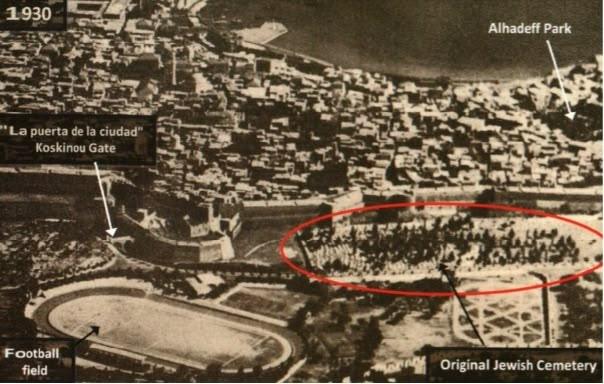
The original location of the old Jewish cemetery was just a short walk outside “la puerta de la ciudad” (Koskinou Gate, also called the Gate of Saint John), which was situated near the “La Fasana” area of the Jewish Quarter.
In the mid 1930s, Italian governor Mario Lago approved a city of Rhodes master plan about the land occupied by the Jewish cemetery to be appropriated for public use and, in turn, allocated a new site about 1.5 kilometers away to the southeast (on the road to Kallithea). It was claimed that this action was based on the need for city development and hygiene. Obviously, this was not well received by the Jewish community, and despite the opposition based on civil legality and religious prohibition, the planned relocation moved forward.
History of the Jewish Cemetery of Rhodes
Contents
Due to the precarious financial state of the Jewish Community of Rhodes, Gov. Mario Lago approved the request of John Menasce, then President of the Jewish Community, to finance the construction of two cemetery rooms: a custodian’s house and a mortuary. In December 1936, Gov. Mario Lago was replaced by Cesare De Vecchi, who enforced the transfer of the Jewish tombstones.
At that time, exhaustive efforts were undertaken by reluctant Jewish families to move over 1,200 tombstones along with the bodies of their beloved to the new location. First cousins David and Nissim Alhadeff were appointed to supervise the move.
In 1938, De Vecchi implemented various “Anti-Jewish Laws,” including the use of Jewish tombstones as building material to rebuild the palace “Il Castillo,” located on top of the “Street of the Knights.” Hizkia M. Franco, a former President of the Jewish Community of Rhodes, wrote an account in his book, The Jewish Martyrs of Rhodes and Cos: “Another particularly sad event occurred during the removal of the remains of our dead from the old to the new Jewish cemetery. De Vecchi ordered the President of our Community to deliver to him about a hundred headstones still bearing the names of our beloved dead, for use as building materials in his infamous castle. Our unfortunate President had to carry out this order, his heart full of bitterness. One can easily imagine the feelings of the whole population. It was in this way that De Vecchi intended to insult the religious conscience of this population, which was left to the mercy of his whims.”
In 1939, the Jewish Community of Rhodes completed the transfer of the remaining hundreds of older tombstones that were not identifiable. These burial stones, without the bodies, were placed in vacant areas of the new cemetery.
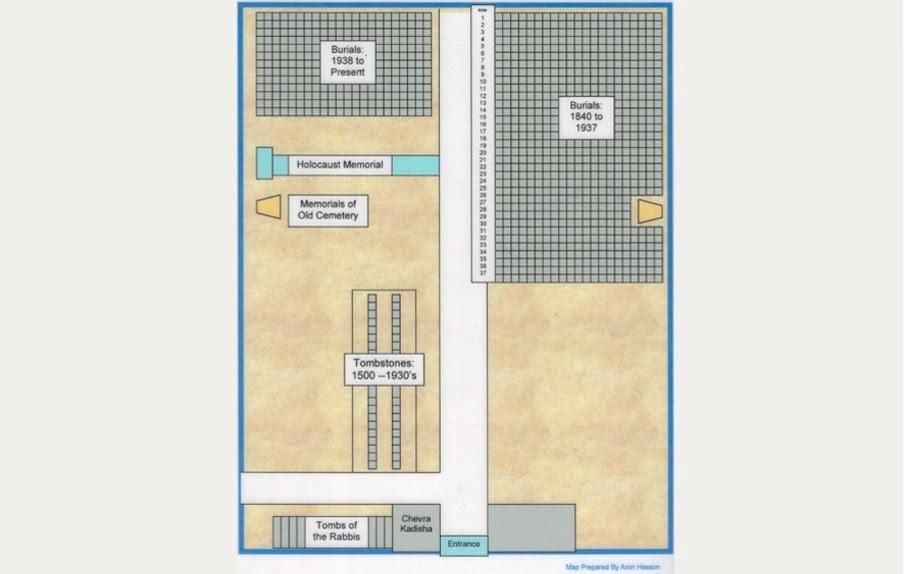
Around 18 graves contain relics of Rabbis that served in Rhodes. Their tombs were moved and rebuilt at the expense of the community. The rest of the tombs, that their families did not have the means to transfer themselves, were destroyed by the Italians and are buried in two cenotaphs. As for the tombstones, after the Italians removed about 100 of the most impressive to decorate the governor’s palace, the rest were moved and scattered to the new cemetery. However, due to their heavy weight and bad weather, they gradually sank into the ground until they disappeared.
Today, with the interest and empowerment of Jewish descendants from Rhodes, many of these tombstones have been excavated and fully disclosed. Some of them are of great interest in the particular form and inscriptions they display. The oldest tombstones date from the mid-17th century. The north side of the cemetery contains approximately 150 graves containing the remains of those who died in 1938 and later, as well as those of victims of World War II air raids. In this section there is a Holocaust Memorial erected by the Community in 1949 listing the names of the families deported from Rhodes.
The Jewish Cemeteries of the Democratic Republic of Congo
(formerly the Belgian Congo and Zaire)
Congregation Israelite Jewish Cemetary
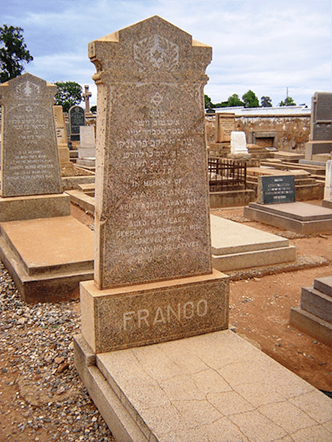
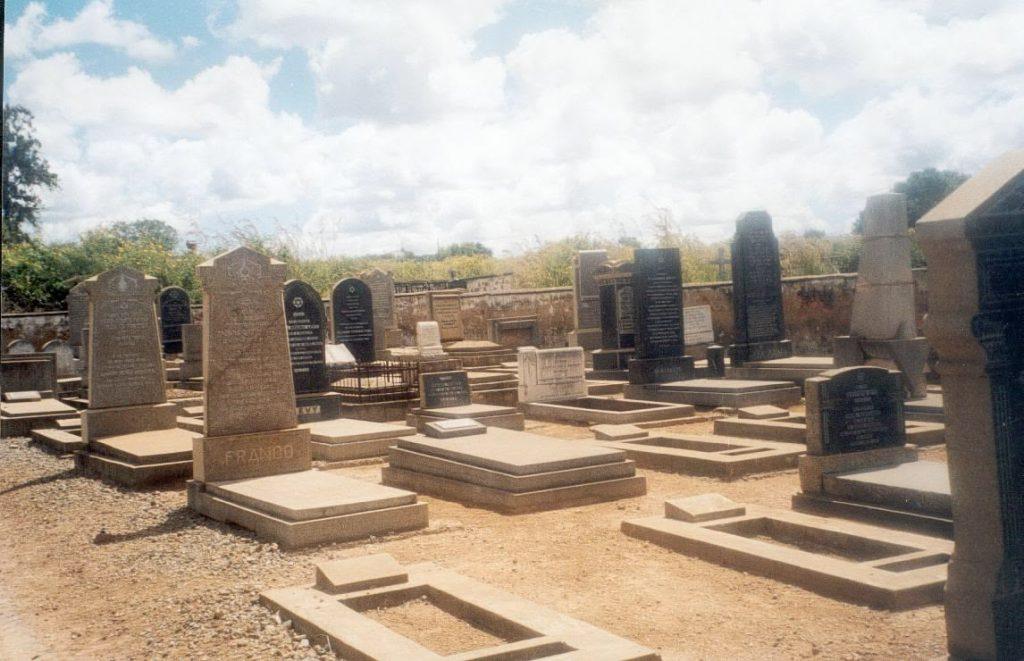
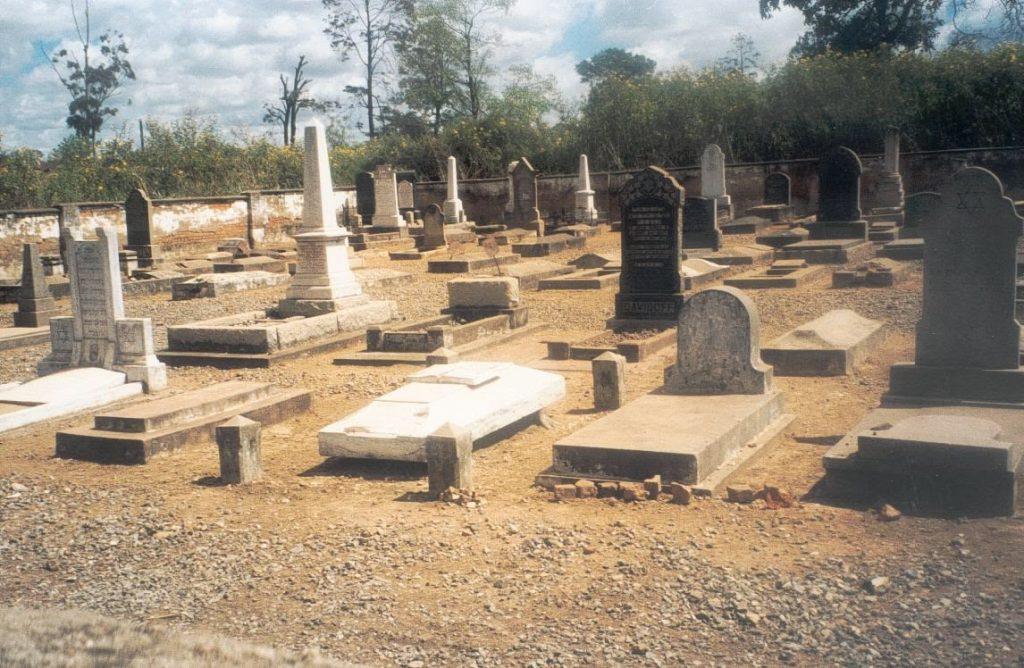
There is an exclusively Jewish cemetery, divided into two parts located in the industrial zone of Lubumbashi (Formerly Elisabethville) outside the railroad tracks. A solid masonry wall with metal entry gates surround the properties. Altogether some 219 graves can be found here containing the names of both Ashkenazi and Sephardic Jewish settlers to the country who were buried here. A variety of stone markers mostly of granite and inscribed in a combination of Hebrew, English, and French fill the site. The cemetery is organized in neat rows, the ground covered mostly in earth and gravel, and some interspersed small trees and shrubs provide shade, greenery, and a sense of place to the flat sites. At the beginning of the twenty-first century, Vittorio (Vico) Levi, a descendent of Lubumbashi’s Jewish community, generously funded the restoration of the cemetery. Just nearby is a colonial-period White Christian cemetery. Also in the immediate area are some low-scaled commercial and industrial buildings.
The Jewish Cemeteries of Zimbabwe
(FORMERLY RHODESIA AND SOUTHERN RHODESIA)
This web page below has detailed information of the cemetery records of Harare (Salisbury) Pioneer Street and Warren Hills, Bulawayo, KweKwe (Que Que) and Kadoma (Gatooma).
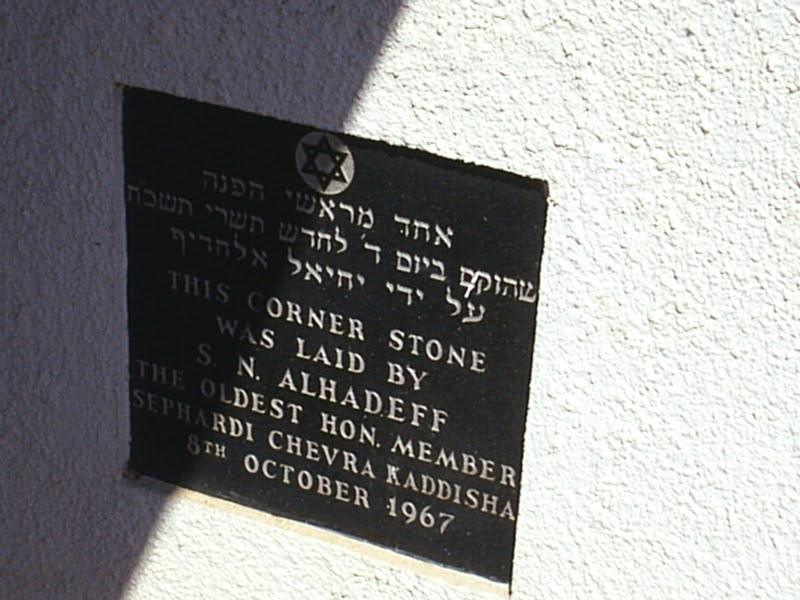
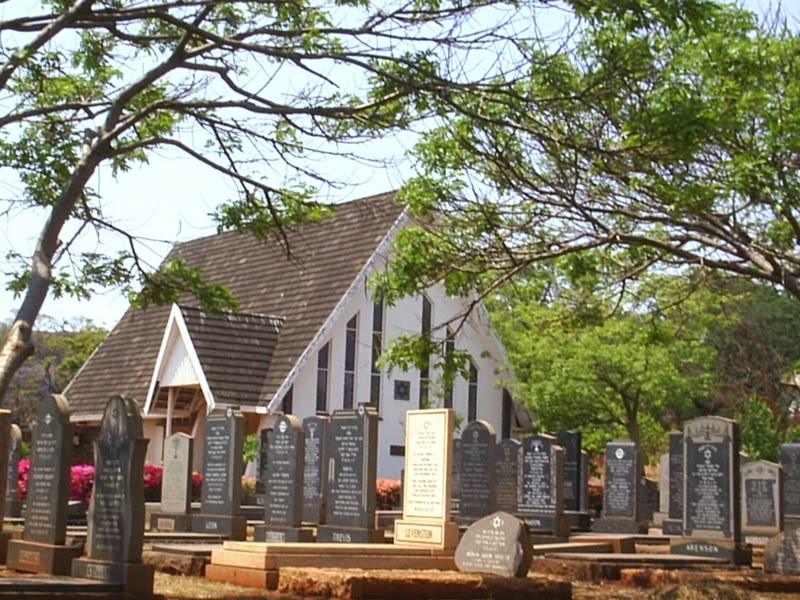
Harare Ohel Shem / Cemetery Chapel (Completed in 1967)
This Jewish cemetery was established on the quiet outskirts of Harare in the early twentieth century. Over the decades, hundreds of Jews have been buried here against the backdrop of the stark Harare hills and surrounded by a community of scurrying monkeys who have long lived here. Hence, the Jewish cemetery in Harare has a distinct sense of history and place.
In 1967, a sizeable chapel, with its stone and brick walls and steeply-sloped A-shaped gabled roof covered in natural cedar shingles, was built on the cemetery property. It is located a short distance away from the Jewish graves and has always been surrounded by some open space.
At its height in the mid-twentieth century, it is estimated that between seven and eight thousand Jews lived in Zimbabwe, with more than half living in Harare. Over the years, hundreds of local Jews were buried at this site, and this chapel saw regular use.
Gweru
In the first quarter of the twentieth century, a Jewish cemetery was established in Gweru on a flat parcel out land outside the centre of town. As a result of a community of Jews of both Eastern and Western European origins settled in Gweru beginning in the early twentieth century, a cemetery came to be needed. During the 1950s and 60s, when the Jewish population in Gweru was at its height, dozens of Jews who spent their years living productive and happy lives in the town came to be buried here.
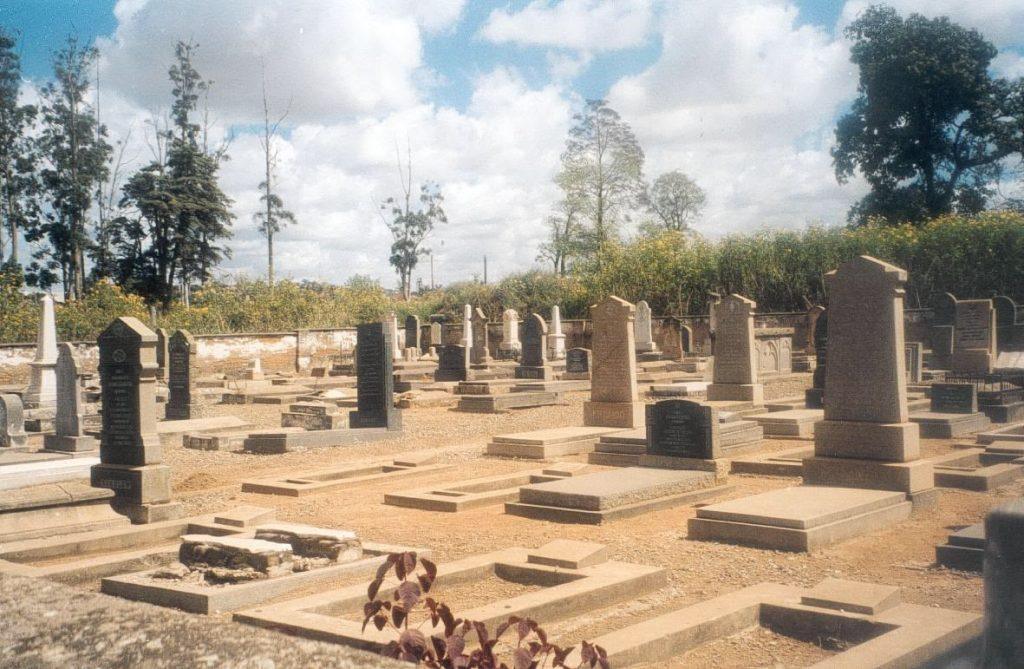
The small and pleasant cemetery, with its solid perimeter wall, small entry gate, and gravel ground covering, is arranged in neat rows. In the Jewish tradition, the graves are oriented in a way that the headstones face Jerusalem. The tall headstones, fabricated in a variety of shapes and designs, are made of granite and inscribed in a combination of Hebrew and English. Surrounding the cemetery is a variety of large native shade trees and vegetation. These provide a pleasant sense of place and isolation.
In 2000, Kweke’s small synagogue was sold by the Jews to the Pentecostal Assembly Church. Since then it has served this black African Christian community. The last local Jew, a Mr. Levitas, died in 2003 and was buried in this cemetery, ending a period of Jewish life in this community that spanned more than a century.
Warren Hills Cemetery established in 1900, Fort Street and 4th Avenue, Bulawayo, Zimbabwe
The Jewish community received a grant from the colonial government for the purchase of land for a cemetery in the late 1890s, and soon thereafter the burial ground was established. Although the exact completion date of the chapel is not known, based on its form and construction it was likely built at the turn of the twentieth century.
In 2015 there were 1,375 Jews buried with their graves organized in neatly-aligned rows. The Jewish graves, with their light or medium-grey granite cover slabs or light or medium-grey granite curbs filled with small stones as well as the English and Hebrew-inscribed headstones also of grey granite, date to the late nineteenth through early twentieth centuries. Warren Hills Jewish Cemetery remains a well-maintained and peaceful place with its red-soil grounds, mature groupings of shade trees and shrubs, and paved paths.
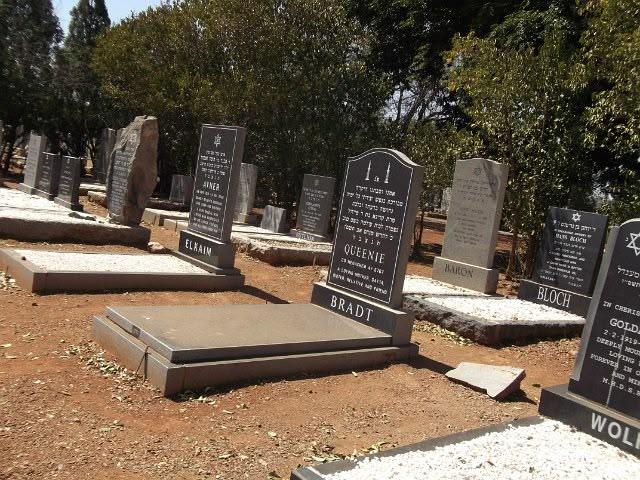
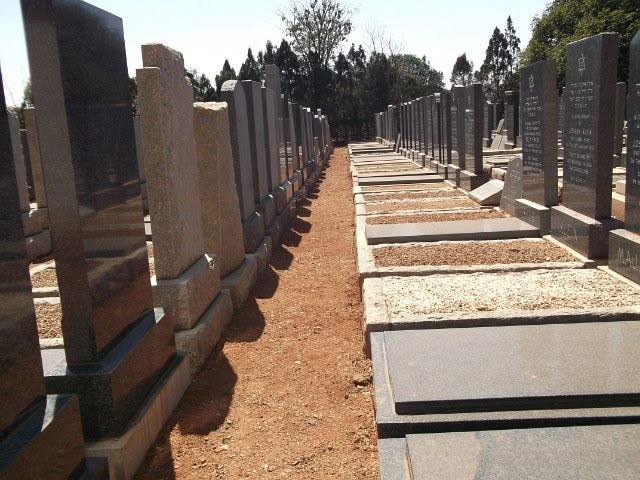
Bulawayo Cemetery
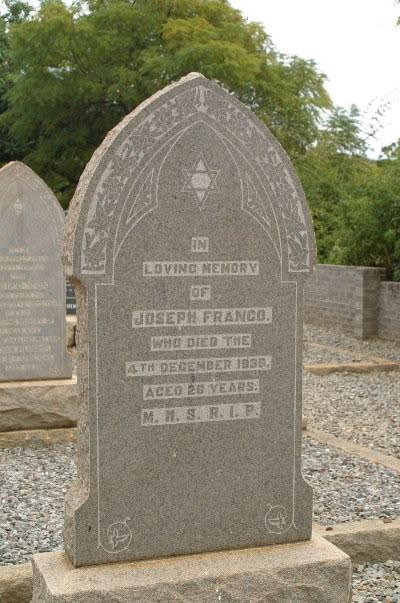
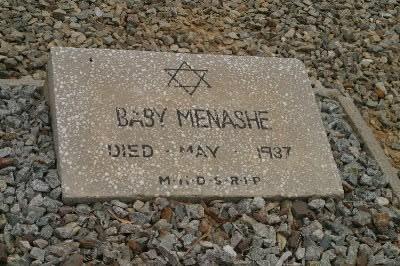
Kadoma Cemetery

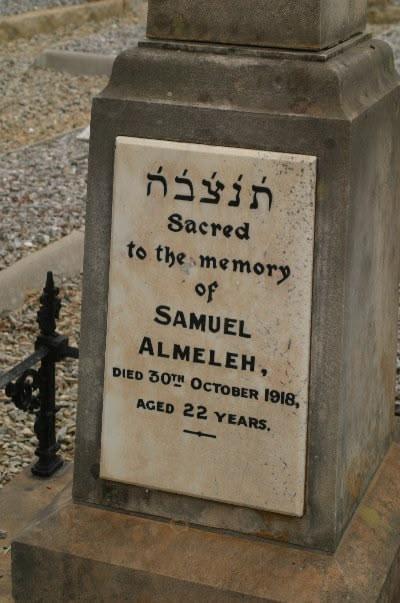
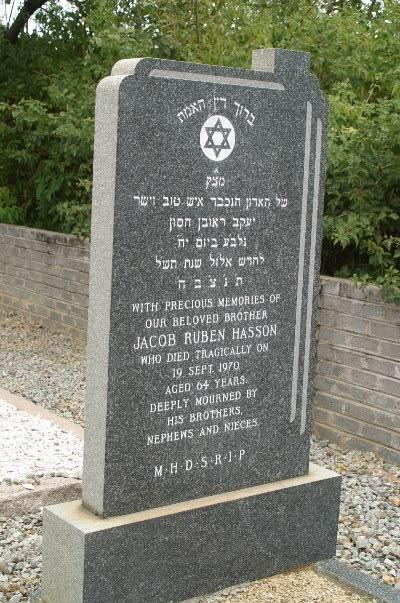
Mutare Cemetery
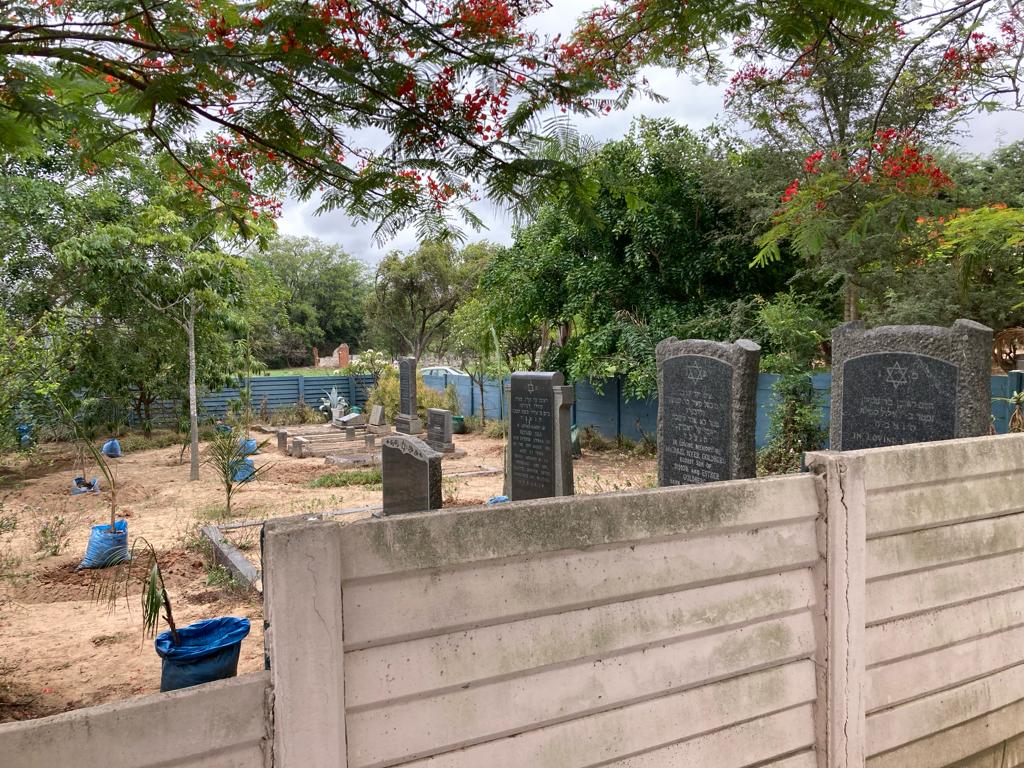

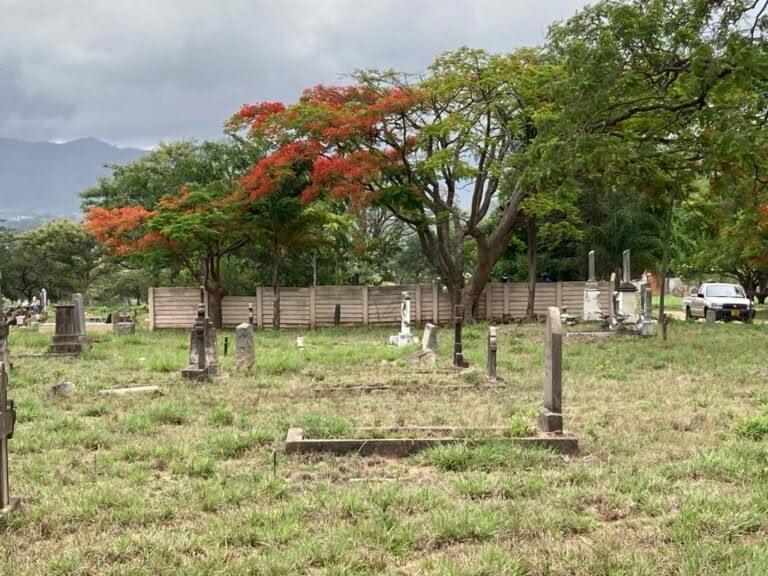
Penhalonga Cemetery


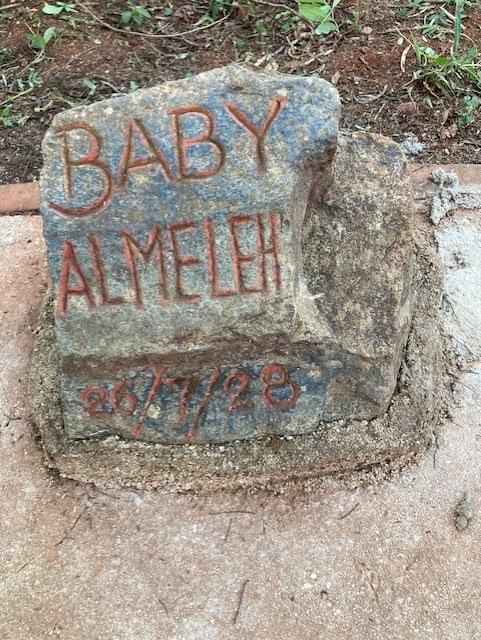
Zvishavane (Shabani)
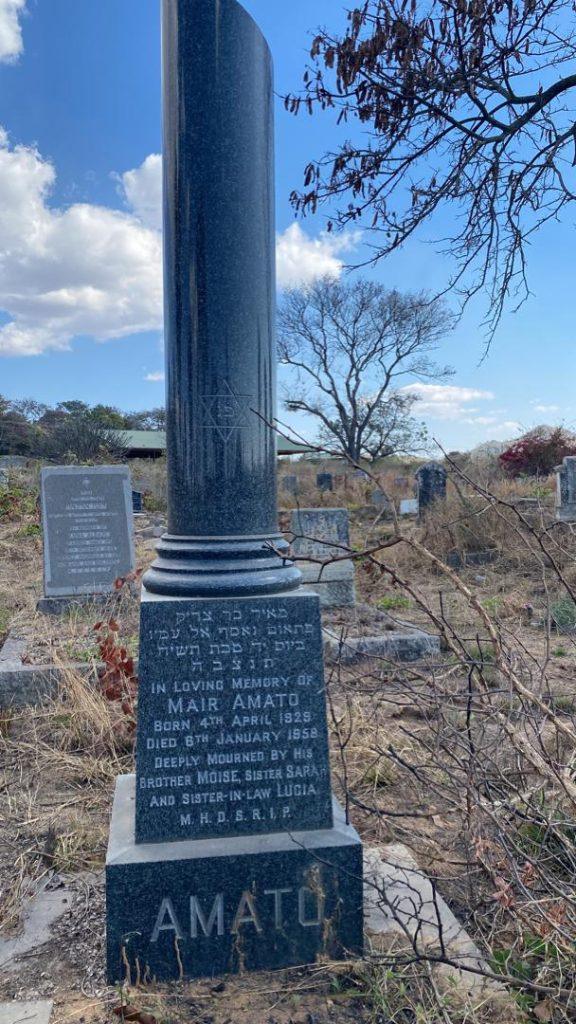
Cemetery Information For South Africa
Cape Town cemetery information
The first Jewish cemetery in Cape Town was purchased in Albert Street, Woodstock in the early 1840’s and was used until the 1880’s. The next was a small cemetery on 7th Avenue in Maitland which has a few hundred graves. This cemetery was in use from 1886 until the Great Flu Epidemic of 1918 and was primarily used by the Cape Town Hebrew Congregation. The large cemetery across the road, known as Woltemade Gate 8, was opened in the late 1890’s and there are a few thousand graves there. Many stones have fallen over, and many graves did not have stones to begin with. Some of the remaining stones are now also quite illegible. It takes a few hours of walking around this cemetery and reading each stone to locate graves of interest.
Pinelands No. 1 and No. 2 Cemeteries are opposite each other on both sides of Forest Drive. The Pinelands Cemetery in Cape Town has tens of thousands of graves. It is well-ordered with tombs marked by relatively standardized black upright stones. All of the graves appear on an online data base, which can be found here:
There has been a practice of burying Sephardim in Pinelands in close proximity thereby forming small sections within the larger cemetery. This was achieved through negotiation between the synagogue and cemetery board and has resulted in most congregants being buried close to each other.
There is a memorial to those who perished in the Shoah in Pinelands 1, but all ceremonies on Yom Hashoah (Holocaust Memorial Day) are held at Pinelands No. 2.
In case of emergency:
Here are the Contact Details for Chevra Kadisha in Cape Town
- Address: 191, Buitenkant Street, Cape Town, 8001
- P.O. Box: 543 Cape Town 8000
- Telephone: 021 461 6310
- Fax: 021 461 8320
Alternatively you can contact The Sephardi Hebrew Congregation of Cape Town for any further information. Office hours which are from Monday to Thursday 08h00 to 15h00, and on Friday from 08h00 to 13h00.
- Tel: 021 439 1962
- WhatsApp: 072 780 6492
- Email: office@sephardi.co.za
Johannesburg:
https://jhbchev.co.za/funerals-unveilings/
Sources and References
- “The Old Cemetery in the Congo”. African Synagogues. Available at: https://www.africansynagogues.org/html/countries/drc/drc2.html.
- Photographs of the old cemetery in the Congo. Jewish Photo Library. Available at: https://jewishphotolibrary.smugmug.com/AFRICA/AFRICACentral/CongoDR/DRCLubumbashiCemeteryOLD.
- Photographs of the Jewish cemetery in the Congo. Jewish Photo Library. Available at: https://jewishphotolibrary.smugmug.com/AFRICA/AFRICACentral/CongoDR/DRCLubumbashiCemeteryNew/i-MHN96QR.
- “Jewish Cemetery of Lubumbashi (Old and New)”. JewishGen. Available at: https://www.jewishgen.org/databases/cemetery/jowbrshow.php?ID=CONG-03649
Additional Resources
Ancient Jewish Burial Stones Newly Discovered in Rhodes in 2023
Rhodes Jewish Museum
Cemetery
Jewish Community of Rhodes
A Guidebook to the Jewish Quarter of Rhodes, pp. 52-54
Rhodes New Jewish Cemetery
European Jewish Cemeteries Initiative (ESJF)
Ancient Jewish Burial Stones Newly Discovered in Rhodes in 2023
Rhodes Jewish Museum
Cemetery
Jewish Community of Rhodes
A Guidebook to the Jewish Quarter of Rhodes, pp. 52-54
Rhodes New Jewish Cemetery
European Jewish Cemeteries Initiative (ESJF)