
Hanukkah celebrates the victory of the Maccabees over the Syrian-Greeks in 165 BE and the rededication of the Temple in Jerusalem. It is said that there was only enough pure olive oil to keep a menorah burning for one day. Miraculously, the flame was kept alight for eight days. Traditionally, we re-enact this miracle by kindling an eight-branched hannukiah over the eight days.
Meaning and Significance
Contents
Rituals of Hannukah
Hanukkah is celebrated with a series of rituals that are performed every day throughout the eight-day holiday, some are family-based and others communal. There are special additions to the daily prayer service, and a section is added to the blessing after meals.
Candle-Lighting Time
Hanukkah lights should usually burn for at least half an hour after it gets dark. Many light at sundown and those who do so should be careful to have enough oil or wax to last until half an hour after dark.
How Do We Light the Hannukiyah?
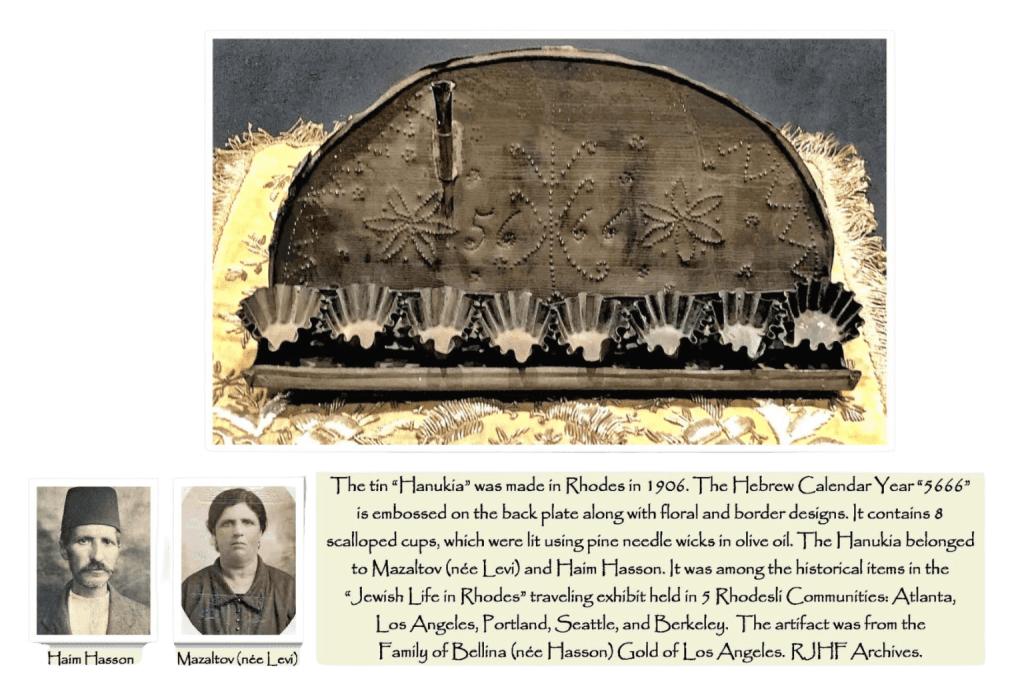
On the first night of Hannukah one should light the candle to the extreme right of the hannukiyah. On all subsequent nights, the new candle should be lit first followed by the candle(s) lit on the previous night(s). Thus, the proper direction for lighting Hannukah candles is from left to right such that the new candle that is added every night due to the additional miracle is lit first. The hannukiyah is usually placed where it is visible from the outside of the home, near a window, to “publicise” the miracle. In Rhodes, eight small glasses with a little water and a thick layer of oil on which wicks were floated and lit were used instead of a hannukiyah.
The Sabbath of Hannukah was known as Shabbat Halbashah, the Sabbath of clothing the poor. On this occasion, the rabbi spoke about the importance of providing garments for the poor. The Jews brought clothing to the synagogue, and the garments were distributed on Rosh Hodesh Tebet (new moon of the month of Tevet – usually coinciding with the month of December), which falls on the sixth day of Hanukkah.
No work is done at night while the candles are burning and families in Rhodes exchanged visits. Many b’nei mitzvah were celebrated during the eight days of the festival.
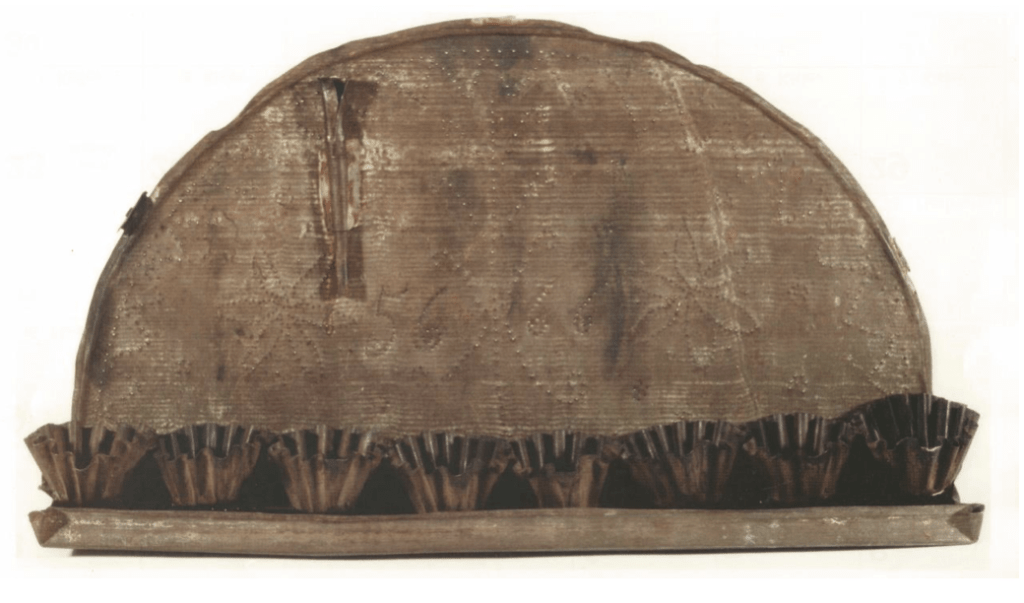
“Hanukiya” from the island of Rhodes, 1906.
From Bellina Hasson Gold family, Photo Taken from the Rhodesli Jewish Calendar of 2014 by Aron Hasson, ©The Rhodes Jewish Historical Foundation
The Food of Hannukah
Fried foods dominate the menu to emphasise the miraculous oil that is central to this holiday.
Delicious leek, potato and fresh herb fritters, fried fish, doughnut puffs and pastry puffs topped with honey. Almond and sesame seed brittle bulukuño, marzipan masapán, Turkish delight lokúm, halva and other sweet treats were also enjoyed.
Also savoured are dairy foods to remember Judith, who it is alleged defeated a Greek tyrant, feeding him with cheese and wine until he fell asleep.
Recollections of Rebecca Amato Levy
In the 1920’s in Rhodes, the Hanukiah or Menorah was made by the tinsmith. The candles were wicks placed in a small container of oil. Youngsters received no gifts, but did not have to go to school on one day during the Hanukah week. On that particular day, relatives, friends and parents would give a little money to the children and they would celebrate by buying whatever they wanted for lunch. Then, all gathered together for a picnic. This was called “el dia di la Miranda.”
In the 1920’s in Rhodes, the Hanukiah or Menorah was made by the tinsmith. The candles were wicks placed in a small container of oil. Youngsters received no gifts, but did not have to go to school on one day during the Hanukah week. On that particular day, relatives, friends and parents would give a little money to the children and they would celebrate by buying whatever they wanted for lunch. Then, all gathered together for a picnic. This was called “el dia di la Miranda.”
Blessings and Songs That Accompany Candle Lighting
The following blessings are said before the lights or the shamash are lit, both in the synagogue and at home. After the first night, each succeeding light is set to the left of those of the preceding evening and lit from left to right. The Sephardi custom is to use an independent light to light all the others, with the shamash being lit last.
בָּרוּךְ אַתָּה יְיָ, אֱלֹהֵֽינוּ מֶֽלֶךְ הָעוֹלָם, אֲשֶׁר קִדְּשָֽׁנוּ בְּמִצְוֹתָיו, וְצִוָּֽנוּ לְהַדְלִיק נֵר חֲנֻכָּה
Barukh atah, Adonai Elo-einu, melekh a-olam, asher kid’shanu b’mitzvotav, v’tsivanu l’adlik ner ḥanukkah.
Blessed are You, Adonai our God, King of the Universe, Who sanctified us with His commandments and commanded us to kindle the Hanukkah light.
בָּרוּךְ אַתָּה יְיָ, אֱלֹהֵֽינוּ מֶֽלֶךְ הָעוֹלָם, שֶׁעָשָׂה נִסִּים לַאֲבוֹתֵֽינוּ בַּיָּמִים הָהֵם בַּזְמַן הַזֶּה
Barukh atah, Adonai Elo-einu, melekh a-olam, she-asah nisim la-avoteinu bayamim ha-em baz’man azeh.
Blessed are You, Adonai our God, King of the Universe, Who performed miracles for our fathers, in those days at this season.
On the first night add:
בָּרוּךְ אַתָּה יְיָ, אֱלֹהֵֽינוּ מֶֽלֶךְ הָעוֹלָם ,שֶׁהֶחֱיָֽנוּ וְקִיְּמָֽנוּ וְהִגִּיעָֽנוּ לַזְּמַן הַזֶּה
Barukh atah, Adonai Elo-einu, melekh a-olam, she-eḥeyanu v’kiy’manu v’igianu laz’man azeh.
Blessed are you, Lord our God, Ruler of the Universe, who creates the fruit of the vine.
The song that is sung while lighting the candles
הַנֵּרוֹת הַלָּלוּ אֲנוּ מַדְלִיקִים עַל הַנִסִּים, וְעַל פֻּרְקָן, וְעַל הַגְּבוּרוֹת, וְעַל הַתְּשׁוּעוֹת, וְעַל הַנִּפְלָאוֹת, וְעַל הַנֶּֽחָמוֹת, שֶׁעָשִֽׂיתָ לַאֲבוֹתֵֽינוּ בַּיָּמִים הָהֵם בַּזְּמַן הַזֶּה, עַל-יְדֵי כֹּהֲנֶֽיךָ הַקְּדוֹשִׁים. וְכָל שְׁמוֹנַת יְמֵי חֲנֻכָּה הַנֵּרוֹת הַלָּלוּ קֹֽדֶשׁ הֵם, וְאֵין לָֽנוּ רְשׁוּת לְהִשְׁתַּמֵּשׁ בָּהֶם, אֶלָּא לִרְאוֹתָם בִּלְבָד, כְּדֵי להוֹדוֹת לְשְׁמֶךָ עַל נִסֶּֽיךָ וְעַל נִפְלְאוֹתֶֽיךָ וְעַל יְשׁוּעָתֶֽךָ.
A-ne-rot a-la-lu a-nu mad-li-kin al anisim, v’al a-purkan, v’al a-g’vurot, v’al a-t’shu-ot, v’al a-nifla-ot, v’al a-neḥamot, she-a-see-ta la-avo-tei-nu ba-ya-mim ha-heim baz-man a-zeh, Al ye-dei ko-a-ne-kha a-ke-do-shim.
V’khol she-mo-nat ye-mei ḥa-nu-kah ha-ne-rot a-la-lu ko-desh hem, v’ein la-nu re-shut l’ish-ta-mesh ba-em, e-la l’r-o-tam bil-vad, k’dei l’o-dot l’sh’mekha al nisekha v’al nif-le-o-te-kha v’al ye-shu-o-te-kha.
We kindle these lights because of the miracles and the redemption, for the mighty deeds and the deliverances, for the wonders and the solace, which You performed for our fathers in those days at this time through Your holy priests. These lights are sacred all eight days of Hanukkah. We are not permitted to make use of them but only to look at them, in order to offer thanks to Your Name for Your miracles, for Your wonders and for Your deliverances.
Psalm 30 תְּהִלִּים
מִזְמוֹר: שִׁיר-חֲנֻכַּת הַבַּיִת לְדָוִד.
מִזְמ֡וֹר שִׁיר־חֲנֻכַּ֖ת הַבַּ֣יִת לְדָוִֽד׃
אֲרוֹמִמְךָ֣ יְ֭הֹוָה כִּ֣י דִלִּיתָ֑נִי וְלֹֽא־שִׂמַּ֖חְתָּ אֹיְבַ֣י לִֽי׃
יְהֹוָ֥ה אֱלֹהָ֑י שִׁוַּ֥עְתִּי אֵ֝לֶ֗יךָ וַתִּרְפָּאֵֽנִי׃
יְֽהֹוָ֗ה הֶעֱלִ֣יתָ מִן־שְׁא֣וֹל נַפְשִׁ֑י חִ֝יִּיתַ֗נִי (מיורדי) [מִיׇּֽרְדִי־]בֽוֹר׃
זַמְּר֣וּ לַיהֹוָ֣ה חֲסִידָ֑יו וְ֝הוֹד֗וּ לְזֵ֣כֶר קׇדְשֽׁוֹ
כִּ֤י רֶ֨גַע ׀ בְּאַפּוֹ֮ חַיִּים בִּרְצ֫וֹנ֥וֹ בָּ֭עֶרֶב יָלִ֥ין בֶּ֗כִי וְלַבֹּ֥קֶר רִנָּֽה׃
וַ֭אֲנִי אָמַ֣רְתִּי בְשַׁלְוִ֑י בַּל־אֶמּ֥וֹט לְעוֹלָֽם
יְֽהֹוָ֗ה בִּרְצוֹנְךָ֮ הֶעֱמַדְתָּה לְֽהַרְרִ֫י־עֹ֥ז הִסְתַּ֥רְתָּ פָנֶ֗יךָ הָיִ֥יתִי
נִבְהָֽל׃
אֵלֶ֣יךָ יְהֹוָ֣ה אֶקְרָ֑א וְאֶל־אֲ֝דֹנָ֗י אֶתְחַנָּֽן׃
מַה־בֶּ֥צַע בְּדָמִי֮ בְּרִדְתִּי אֶ֫ל־שָׁ֥חַת הֲיוֹדְךָ֥ עָפָ֑ר הֲיַגִּ֥יד אֲמִתֶּֽךָ
שְׁמַע־יְהֹוָ֥ה וְחׇנֵּ֑נִי יְ֝הֹוָ֗ה הֱֽיֵה־עֹזֵ֥ר לִֽי׃
הָפַ֣כְתָּ מִסְפְּדִי֮ לְמָח֢וֹל לִ֥֫י פִּתַּ֥חְתָּ שַׂקִּ֑י וַֽתְּאַזְּרֵ֥נִי שִׂמְחָֽה׃
לְמַ֤עַן ׀ יְזַמֶּרְךָ֣ כָ֭בוֹד וְלֹ֣א יִדֹּ֑ם יְהֹוָ֥ה אֱ֝לֹהַ֗י לְעוֹלָ֥ם אוֹדֶֽךָּ׃
A Psalm; a Song at the Dedication of the House; of David.
I will extol thee, O LORD, for You have raised me up, and have not suffered my enemies to rejoice over me.
O LORD my God, I cried unto Thee, and You didst heal me;
O LORD, You brought up my soul from the nether-world; You did keep me alive, that I should not go down to the pit.
Sing praise unto the LORD, O ye His godly ones, and give thanks to His holy name.
For His anger is but for a moment, His favour is for a life-time;
weeping may tarry for the night, but joy comes in the morning. Now I had said in my security: ‘I shall never be moved.’
You established, O LORD, in Thy favour my mountain as a stronghold– You hid Your face; I was frightened.
Unto You, O LORD, did I call, and unto the LORD I made supplication:
What profit is there in my blood, when I go down to the pit? Shall the dust praise You? shall it declare Your truth?
When lighting the candles at home, the pizmon Maoz Tzur is sung:
מָעוֹז צוּר יְשׁוּעָתִי לְךָ נָאֶה לְשַׁבֵּֽחַ
תִּכּוֹן בֵּית תְּפִלָּתִי וְשָׁם תּוֹדָה נְזַבֵּֽחַ,
לְעֵת תָּכִין מַטְבֵּֽחַ מִצָּר הַמְנַבֵּֽחַ אָז
אֶגְמֹר בְּשִׁיר מִזְמוֹר חֲנֻכַּת הַמִּזְבֵּֽחַ
Ma’oz tzur yeshu’at,i lekha na’eh l’habe-aḥ,
Tikon beit t’filati, v’sham todah n’zabe’aḥ,
Le’ei takhin matbe-aḥ, mitzar a-m’nabe’aḥ,
Az egmor, beshir mizmor ḥ,anukat am-izbe’aḥ.
O Fortress, Rock of my salvation, unto thee it is becoming to give praise:
let my house of prayer be restored, and I will there offer thee thanksgivings
when thou shalt have prepared a slaughter of the blaspheming foe,
I will complete with song and psalm the dedication of the altar.
Azeremoz una merenda
A song reflecting the preparations for the Hanukah feast. Children used to go from house to house and demand to be given flour, oil and other ingredients to prepare the burmuelos (the doughnuts or pancakes typical of Hanukah). A recording of the song can be found here.
“Ocho Kandelikas” (Eight Little Candles)
Words: Flory Jagoda, Sung in Ladino
2 recordings of this song can be found below:
Ocho Kandelikas (Eight Little Candles) – Nani Vazana
Ocho Kandelikas – Flory Jagoda
SJBA – Hanukkah Booklet
Hanukah linda sta aki
Ocho kandelas para mi,
Hanukah linda sta aki
Ocho kandelas para mi, O
Una kandelika, dos kandelikas
Tres kandelikas, kuatro kandelikas
Sintyu kandelikas, sej kandelikas
Siete kandelikas, ocho kandelas para mi
Muchas fiestas vo fazer
Kon alegria i plazer
Muchas fiestas vo fazer
Kon alegria i plazer
Los pastelikos vo kumer
Kon almendrikas i la myel
Los pastelikos vo kumer
Kon almendrikas i la myel, O
Una kandelika, dos kandelikas
Tres kandelikas, kuatro kandelikas
Sintyu kandelikas, sej kandelikas
Siete kandelikas, ocho kandelas para mi
Una kandelika, dos kandelikas
Tres kandelikas, kuatro kandelikas
Sintyu kandelikas, sej kandelikas
Siete kandelikas, ocho kandelas para mi
Beautiful Hanukkah is here
Eight candles for me
Beautiful Hanukkah is here
Eight candles for me, oh
One little candle, two little candles
Three little candles, four little candles
Five little candles, six little candles
Seven little candles, eight candles for me
There will be a lot of parties
With joy and happiness
There will be a lot of parties
With joy and happiness
We’re going to eat little pastries
With small almonds and honey
We’re going to eat little pastries
With small almonds and honey, oh
One little candle, two little candles
Three little candles, four little candles
Five little candles, six little candles
Seven little candles, eight candles for me
One little candle, two little candles
Three little candles, four little candles
Five little candles, six little candles
Seven little candles, eight candles for me
This song is about HANNAH AND HER SEVEN SONS, a story told in II *Maccabees , Chapter 7, of seven brothers who were seized along with their mother by *Antiochus IV Epiphanes, presumably shortly after the beginning of the religious persecutions in 167/166 B.C.E. that lead to the revolt culminating in Hanukah. They were commanded to prove their obedience to the king by partaking of swine’s flesh. The brothers defiantly refused to do so. Encouraged in their resolve by their mother, they were executed after being put to frightful tortures. When the mother was appealed to by the king to spare the youngest child’s life by prevailing upon him to comply, she urged the child instead to follow in the path of his brothers, and she herself died shortly thereafter.
2 recordings can be found below:
https://www.youtube.com/watch?v=bqn9yjck_3chttps://www.youtube.com/watch?v=7neU1Bfdjqc
Siete hijos tiene Hanna
Hanna la buena guidía
Los mando a yamar el rey
A todos siete en un día
Vena aqui hijo de Hanna
Hanna la buena guidía
Te dare la mi corona
Asentate en la mi síya
Yo no quero tu corona
Ni me asento en la tu síya
Yo no piedro mi Ley Santa
No entro en la falsía
Hanna has seven sons
Hanna the good Jewess
The king ordered them to come
All seven of them in one day
Come here son of Hanna
Hanna the good Jewess
I will give you my crown
And you’ll sit down on my throne
I do not want your crown
Nor will I sit on your throne
I will not forsake my Holy Law
Nor enter into falsehood
Sephardic vs Ashkenazi traditions in Hanukkah
By Yosef Bitton
December 14, 2022
There are no significant differences between the traditions of Sephardic and Ashkenazi Jews regarding Hanukkah. There are only some minor variations.
WHERE SHOULD YOU PLACE YOUR HANUKIA?
Many Sephardic families, especially in Israel, keep the original custom of lighting the candles outside the house, on the opposite side of the mezuza. The Ashkenazi tradition, however, is to light the Hanukiah (aka “menora”) inside the house, near a window, so that it can be seen from the outside.
HOW MANY HANUKIOT WE LIGHT?
In many Ashkenazi communities, the custom is that each family member lights their own Hanukiah, even young children, once they are older than six years. In Sephardic families, however, it is customary to light only one Hanukia per family (מצוות איש וביתו). This is similar to the case of Shabbat candles: whereas according to the Sephardic tradition, only the mother lights the Shabbat candles; according to the Ashkenazi tradition, each of the daughters in the family lights their own Shabbat candles.
LEHADLIQ NER HANUKKA or NER SHEL HANUKKA?
According to the Ashkenazi tradition in the berakha, one says: “lehadliq ner SHEL Hanukka”, (… to light the Hanukka candle). While Sefaradim says, following the words of the Shulhan Arukh: “lehadliq ner Hanukka”, omitting the word “SHEL”. There is no grammatical or semantic difference between these two versions. And one cannot say that one version is correct and the other is not. Actually, the original version of this berakha (Maimonides, MT Hanukkah 3: 4) is “lehadliq ner SHEL Hanukka”, similar to “lehadliq ner SHEL Shabbat”. The Sephardic tradition, which generally follows Maimonides, is based, in this case, on the opinion of the Mequbalim.
TRADITIONS
Playing the sebibon (dreidel) is an Ashkenazi custom that Sephardim never practised. Same as Hanukka Gelt (coins or gifts for children).
THE FUNCTION OF THE SHAMASH
According to the Ashkenazi custom, the auxiliary candle or shamash is lit first. Thus, after saying the berakha one lights the rest of the candles with the Shamash, and after lightening all candles, one deposits the shamash in its place. The Sephardic tradition, however, is to light all the candles with a match or a separate candle, and only at the end is the shamash lit. Whereas for the Ashkenazi tradition, the shamash is also used to light the candles, in the Sephardic tradition, it is not; since the main reason the shamash is lit is to avoid a benefit from the light of the Hanukka candles, in case we involuntarily use the lights of those candles. In other words, whereas for the Ashkenazi tradition, you use the “flame” of the Shamash -to light other candles- for the Sephardic tradition, the Shamash is used just for its “light”.
By Yosef Bitton
December 14, 2022
There are no significant differences between the traditions of Sephardic and Ashkenazi Jews regarding Hanukkah. There are only some minor variations.
WHERE SHOULD YOU PLACE YOUR HANUKIA?
Many Sephardic families, especially in Israel, keep the original custom of lighting the candles outside the house, on the opposite side of the mezuza. The Ashkenazi tradition, however, is to light the Hanukiah (aka “menora”) inside the house, near a window, so that it can be seen from the outside.
HOW MANY HANUKIOT WE LIGHT?
In many Ashkenazi communities, the custom is that each family member lights their own Hanukiah, even young children, once they are older than six years. In Sephardic families, however, it is customary to light only one Hanukia per family (מצוות איש וביתו). This is similar to the case of Shabbat candles: whereas according to the Sephardic tradition, only the mother lights the Shabbat candles; according to the Ashkenazi tradition, each of the daughters in the family lights their own Shabbat candles.
LEHADLIQ NER HANUKKA or NER SHEL HANUKKA?
According to the Ashkenazi tradition in the berakha, one says: “lehadliq ner SHEL Hanukka”, (… to light the Hanukka candle). While Sefaradim says, following the words of the Shulhan Arukh: “lehadliq ner Hanukka”, omitting the word “SHEL”. There is no grammatical or semantic difference between these two versions. And one cannot say that one version is correct and the other is not. Actually, the original version of this berakha (Maimonides, MT Hanukkah 3: 4) is “lehadliq ner SHEL Hanukka”, similar to “lehadliq ner SHEL Shabbat”. The Sephardic tradition, which generally follows Maimonides, is based, in this case, on the opinion of the Mequbalim.
TRADITIONS
Playing the sebibon (dreidel) is an Ashkenazi custom that Sephardim never practised. Same as Hanukka Gelt (coins or gifts for children).
THE FUNCTION OF THE SHAMASH
According to the Ashkenazi custom, the auxiliary candle or shamash is lit first. Thus, after saying the berakha one lights the rest of the candles with the Shamash, and after lightening all candles, one deposits the shamash in its place. The Sephardic tradition, however, is to light all the candles with a match or a separate candle, and only at the end is the shamash lit. Whereas for the Ashkenazi tradition, the shamash is also used to light the candles, in the Sephardic tradition, it is not; since the main reason the shamash is lit is to avoid a benefit from the light of the Hanukka candles, in case we involuntarily use the lights of those candles. In other words, whereas for the Ashkenazi tradition, you use the “flame” of the Shamash -to light other candles- for the Sephardic tradition, the Shamash is used just for its “light”.
Additional Resources
Hanukkah recipes
The Kosher Cowboy
Hanukkah recipes
The Kosher Cowboy
Hanukkah recipes
The Kosher Cowboy
Hanukkah recipes
The Kosher Cowboy
Sources and References
- Rebecca Amato Levy, I Remember Rhodes (1987).
- Rhodes Jewish Historical Foundation Facebook Page.
- Marc Angel, The Jews of Rhodes (1978).
- Stella Cohen, Stella’s Sephardic Kitchen (2012).
- “Hanukkah”. Sephardic U. Available at: https://sephardicu.com/holidays/hanukkah/.
- “Hanukkah”. Sephardi Federation of Palm Beach County. Available at: https://sephardifederationpbc.org/hanukah/.