
Historically, the Sephardic and Ashkenazi communities both required the bride to go to the mikvah (ritual bath) before marriage. It is a way to mark the transition from being single to being married.
The Sephardic ritual is very festive. It is known as the Banyo di Novya or the Bath of the Bride and is essentially a Bridal Shower. While the Ashkenazi bride will probably be accompanied by her mother or close female family members; the Sephardic bride will be accompanied to the bathhouse with a full entourage of female friends, family, neighbours, and children. After the mikvah ceremony, the bride was greeted with song (special mikvah wedding songs), dance, and sweets are thrown at her for good luck.
Meaning and Significance
Contents
Video Reflections
https://youtu.be/JWfOr7HtnSkhttps://youtu.be/bn7bvJ37VKw
History and How The Ceremony Was Carried Out
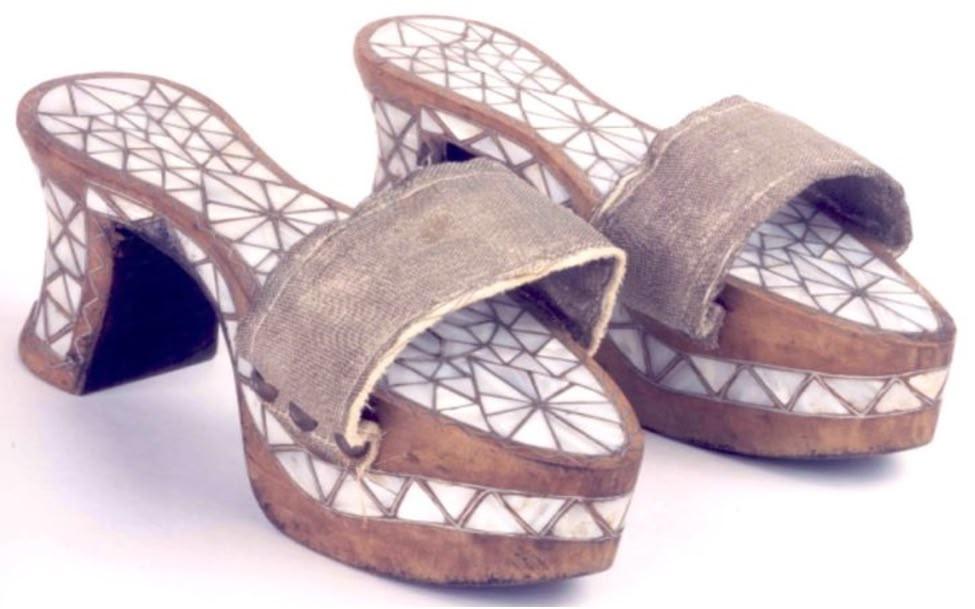
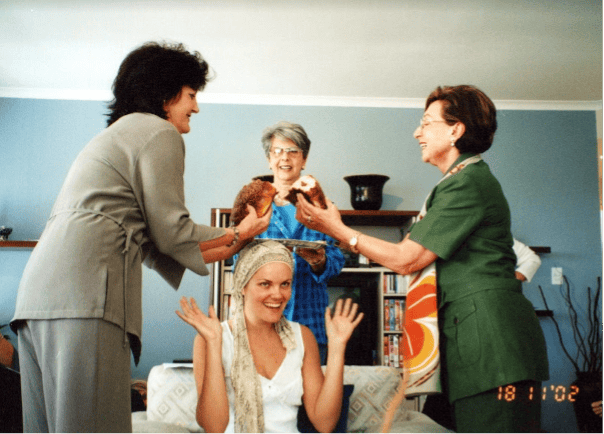
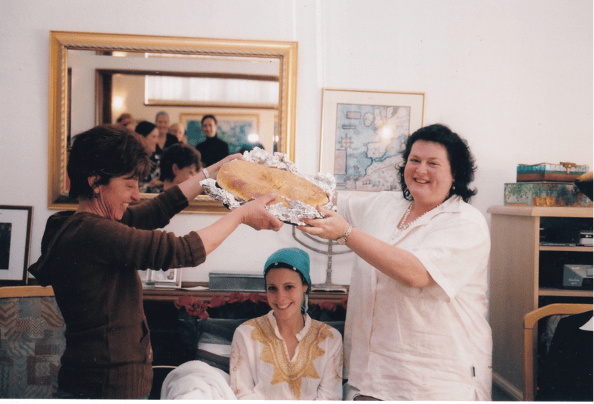
Traditionally in Rhodes, the groom would send a gift to his fiancé including toiletries, perfume and an embroidered towel. After the ritual bath, the bride-to-be, dressed in an ornate gown with a yashmak or embroidered cévri wound round the bride’s head and wearing Turkish slippers made of mother of pearl and embroidered cloth is seated. For this occasion, a round festive bread stuffed with marzipan and often with an embedded gold coin or piece of jewellery concealed in the dough, is wrapped in foil and baked. The bread is broken over the bride’s head by her mother. The women entertain the bride-to-be, alegrar la novya, wishing her a life without sorrow and adversity, Blanka i kontenta ke estes siempre. They sing ancient songs – kanticas and romansos – some extolling the bride’s beauty, : ‘.. los kavyeos: hilos de oro’ (the hair: threads of gold) … Los ozos: ricos emeraldares’ (the eyes: rich emeralds), accompanied with musical instruments and the sound of tambourines
“Takos”
The Mikva clogs decorated with inlaid mother of pearl was worn by the new bride at the ceremony of her ritual bath (el banyo de novya).
Rebecca Amato Levy’s reflection on Banyo di Novya
The day before the wedding was the banyo di novya (bridal bath). If the groom was wealthy, he would rent out the entire bath house and it was reserved strictly for the bridal bath. If he was not, then it was not a private banyo. On that day, the groom would send baskets filled with fruit, sweets, desayuno, breads, etc. for all the guests to eat in the ante-chamber of the bath house. The party consisted of eating, singing and dancing in honour of the bride. After the bride had been prepared by the woman of the bath house, she was then taken to a special room for the tevila, immersion in a mikvah. The bride immersed several times. Then, one of the older women would symbolically break the rosca over her head and give her marzipan to eat. The rosca represented a life of fulfilment and the marzipan represented sweetness in life. Then a benediction or beraha was read by the women in Hebrew. From that moment on, the groom could not see the bride until they met at the synagogue for the ceremony.
The day before the wedding was the banyo di novya (bridal bath). If the groom was wealthy, he would rent out the entire bath house and it was reserved strictly for the bridal bath. If he was not, then it was not a private banyo. On that day, the groom would send baskets filled with fruit, sweets, desayuno, breads, etc. for all the guests to eat in the ante-chamber of the bath house. The party consisted of eating, singing and dancing in honour of the bride. After the bride had been prepared by the woman of the bath house, she was then taken to a special room for the tevila, immersion in a mikvah. The bride immersed several times. Then, one of the older women would symbolically break the rosca over her head and give her marzipan to eat. The rosca represented a life of fulfilment and the marzipan represented sweetness in life. Then a benediction or beraha was read by the women in Hebrew. From that moment on, the groom could not see the bride until they met at the synagogue for the ceremony.
Refranes – Sayings
“Ni Pesach sin Matsah,
Ni ija sin mazal.”
Like there is always matzah for Pesach, So there is always her destiny for a girl.
“Ken no tiene a la erruoza,
Ben la mocoza.”
The man who can’t find a pretty girl
Kisses a snotty one.
Songs
ANSI DISE LA MUESTRA NOVIA / And so Asks our Bride
If the first son was born to a family where neither parent was a Cohen or Levy, and there were no previous miscarriages, then a rehmido, redemption, was performed.
According to our tradition, this first son belongs to the priesthood. Even though the child remains with his mother, for the first month he belongs in spirit to the Cohanim until the Rehmido is performed. The son’s father must then redeem his son by paying five pieces of silver to a Cohen.
On the 31st day of the child’s life, a party was given at home. The ceremony was a festive occasion. Family and friends were invited to attend and there was a large celebration, with much food, drink and singing of songs. One of the Cohanim would take the child from his mother’s arms and say, “According to our laws and customs, this child belongs to God.” During this time, while the Cohen held the baby, the friends who have gathered, sang special songs. The baby’s father placed five coins on a tray. The Cohen asked: “Do you want the child or the money?” The father extended his arms to receive the child. The Cohen repeated his question and the father replied again, “yes,” he wanted his son and not the money.
According to our tradition, in a family of four consecutive generations of firstborn boys (Behorim), the child is exempt from the Rehmido as this is considered a natural-born blessing.
MI ESPOSIKA ESTA’NEL (EN EL) BANYO / My Betrothed is in the Turkish Bath
Mi esposika esta’nel banyo
Mi esposika esta’nel banyo
Vestida de kolorado
Echate a la mar
Eehate a la mar y alkansa
Echate a la mar.
Entre la mar i el rio
Entre la mar i el rio
Kresio un arvol de bembrio
Echate a la mar
Behate a la mar y alkansa
Echate a la mar.
Entre la mar i la guerta
Entre la mar i la guerta
Kresio un arvol de pimienta
Echate a la mar
Echate a la mar y alkonsa
Echate a la mar.
Entre la mar i la tierra
Entre la mar i la tierra
Kresio un arvol de kanella
Echate a la mar
Echote a la mary alkansa
Echate a la mar.
My betrothed is in the Turkish bath
My betrothed is in the Turkish bath
All dressed in red
I jump into the sea
She is mine if I jump into the sea and reach her
I jump into the sea.
Between the sea and the river
Between the sea and the river
Crew a tree of quinces
I jump into the sea
She is mine if I jump into the sea and reach for her
I jump into the sea.
Between the sea and the garden
Between the sea and the garden
Grow a pepper tree
I jump into the sea
She is mine if I jump into the sea and reach her
I jump into the sea.
Between the sea and the earth
Between the sea and the earth
Grew a cinnamon tree
I jump into the sea
She is mine if l jump into the sea and reach her
I jump into the sea.
BUENO, A SE BIVA LA KUSUEGRA
Bueno, a se biva la kusuegra
Bueno, a se biva la kusuegra
K’es loke le dio a su ija
Nada no le dio a su ija
Ya le di yardan de perlas
Ya le di yardan de perlas
Ke se pase kon su suegra
Bueno, a se biva la kusuegra
Bueno, a se biva la kusuegra
K’es lo ke le dio a su ija
Nada no le dio a su ija
Ya le di avas kemadas
Ya le di avas kemadas
Ke se pase kon sus kunyadas
Bueno, a se viva la kusuegra
Bueno, a se viva la kusuegra
K’es lo ke le dio a su ija
Noda no le dio a su ajo
Ya le di siete siperes
Ya le di siete sipetes
Ke los avra i ke los serre
Bueno, a se viva la kusuegra
Bueno, a se viva lo kustegru
K’es lo ke le dio a su ija
Nada no le dio a su ija
Ya le di siete chintianes
Ya le di siele chintianes
Una para kado noche
Bueno, a se viva la kusuegra
Bueno, a se viva la kusuegra
K’es lo ke le dio a su ija
Nada no le dio a su ija
Ya le di un manseviko
Ya le di un manseviko
Sin barba i sin mustachico
Long live the mother-in-law
Long live the mother-in-law
What did you give your daughter (for her trousseau)?
I did not give her anything,
Just a pearl choker to get along with her mother-in-law.
Long live the mother-in-law
Long live the mother-in-law
What did you give your daughter?
I did not give her anything,
Just some burnt beans to get along with her sisters-in-law.
Long live the mother-in-law
Long live the mother-in-law
What did you give your daughter?
I did not give her anything,
Just 7 trunks that she can open and shut.
Long live the mother-in-law
Long live the mother-in-law
What did you give your daughter?
I did not give her anything,
Just 7 pairs of bloomers, one for each night.
Long live the mother-in-law
Long live the mother-in-law
What did you give your daughter?
I did not give her anything,
Just a young man
Without a beard or moustache.
MORENIKA A MI ME YAMAN
Morenika a mi me yaman, yo blanka nasi
El sol del inverano me iso ansi.
Morenika igraziosika sosh morenika, graziosika i mavra matia mu
Morenika a mi me yama el ijo del rey.
I si otra vez me yama yo me vo kon el.
Morenika graziosika sosh
Morenika i graziosika mavra matia mu.
They call me dark-skinned one, but I was born fair.
It is the summer sun that made me so.
Little dark skinned and pretty one
You are dark skinned, pretty with dark eyes.
His little dark-skinned one
Is what the king’s son calls me And if he calls me again
If the first son was born to a family where neither parent was a Cohen or Levy, and there were no previous miscarriages, then a rehmido, redemption, was performed.
According to our tradition, this first son belongs to the priesthood. Even though the child remains with his mother, for the first month he belongs in spirit to the Cohanim until the Rehmido is performed. The son’s father must then redeem his son by paying five pieces of silver to a Cohen.
On the 31st day of the child’s life, a party was given at home. The ceremony was a festive occasion. Family and friends were invited to attend and there was a large celebration, with much food, drink and singing of songs. One of the Cohanim would take the child from his mother’s arms and say, “According to our laws and customs, this child belongs to God.” During this time, while the Cohen held the baby, the friends who have gathered, sang special songs. The baby’s father placed five coins on a tray. The Cohen asked: “Do you want the child or the money?” The father extended his arms to receive the child. The Cohen repeated his question and the father replied again, “yes,” he wanted his son and not the money.
According to our tradition, in a family of four consecutive generations of firstborn boys (Behorim), the child is exempt from the Rehmido as this is considered a natural-born blessing.
Mi esposika esta’nel banyo
Mi esposika esta’nel banyo
Vestida de kolorado
Echate a la mar
Eehate a la mar y alkansa
Echate a la mar.
Entre la mar i el rio
Entre la mar i el rio
Kresio un arvol de bembrio
Echate a la mar
Behate a la mar y alkansa
Echate a la mar.
Entre la mar i la guerta
Entre la mar i la guerta
Kresio un arvol de pimienta
Echate a la mar
Echate a la mar y alkonsa
Echate a la mar.
Entre la mar i la tierra
Entre la mar i la tierra
Kresio un arvol de kanella
Echate a la mar
Echote a la mary alkansa
Echate a la mar.
My betrothed is in the Turkish bath
My betrothed is in the Turkish bath
All dressed in red
I jump into the sea
She is mine if I jump into the sea and reach her
I jump into the sea.
Between the sea and the river
Between the sea and the river
Crew a tree of quinces
I jump into the sea
She is mine if I jump into the sea and reach for her
I jump into the sea.
Between the sea and the garden
Between the sea and the garden
Grow a pepper tree
I jump into the sea
She is mine if I jump into the sea and reach her
I jump into the sea.
Between the sea and the earth
Between the sea and the earth
Grew a cinnamon tree
I jump into the sea
She is mine if l jump into the sea and reach her
I jump into the sea.
Bueno, a se biva la kusuegra
Bueno, a se biva la kusuegra
K’es loke le dio a su ija
Nada no le dio a su ija
Ya le di yardan de perlas
Ya le di yardan de perlas
Ke se pase kon su suegra
Bueno, a se biva la kusuegra
Bueno, a se biva la kusuegra
K’es lo ke le dio a su ija
Nada no le dio a su ija
Ya le di avas kemadas
Ya le di avas kemadas
Ke se pase kon sus kunyadas
Bueno, a se viva la kusuegra
Bueno, a se viva la kusuegra
K’es lo ke le dio a su ija
Noda no le dio a su ajo
Ya le di siete siperes
Ya le di siete sipetes
Ke los avra i ke los serre
Bueno, a se viva la kusuegra
Bueno, a se viva lo kustegru
K’es lo ke le dio a su ija
Nada no le dio a su ija
Ya le di siete chintianes
Ya le di siele chintianes
Una para kado noche
Bueno, a se viva la kusuegra
Bueno, a se viva la kusuegra
K’es lo ke le dio a su ija
Nada no le dio a su ija
Ya le di un manseviko
Ya le di un manseviko
Sin barba i sin mustachico
Long live the mother-in-law
Long live the mother-in-law
What did you give your daughter (for her trousseau)?
I did not give her anything,
Just a pearl choker to get along with her mother-in-law.
Long live the mother-in-law
Long live the mother-in-law
What did you give your daughter?
I did not give her anything,
Just some burnt beans to get along with her sisters-in-law.
Long live the mother-in-law
Long live the mother-in-law
What did you give your daughter?
I did not give her anything,
Just 7 trunks that she can open and shut.
Long live the mother-in-law
Long live the mother-in-law
What did you give your daughter?
I did not give her anything,
Just 7 pairs of bloomers, one for each night.
Long live the mother-in-law
Long live the mother-in-law
What did you give your daughter?
I did not give her anything,
Just a young man
Without a beard or moustache.
Morenika a mi me yaman, yo blanka nasi
El sol del inverano me iso ansi.
Morenika igraziosika sosh morenika, graziosika i mavra matia mu
Morenika a mi me yama el ijo del rey.
I si otra vez me yama yo me vo kon el.
Morenika graziosika sosh
Morenika i graziosika mavra matia mu.
They call me dark-skinned one, but I was born fair.
It is the summer sun that made me so.
Little dark skinned and pretty one
You are dark skinned, pretty with dark eyes.
His little dark-skinned one
Is what the king’s son calls me And if he calls me again
Menu
The bridegroom’s mother brought refreshments which included marzipan decorated with silver dragées, some saropé (white sweets) as a symbol of purity, and cherry cordial. The marzipan served is symbolic of wishes for her life to be as sweet as the marzipan, Para ke la vida kon tu esposo sea dulse komo il masapan.
Videos
In 1982, a group of the women from Rhodes agreed to recreate a Banyo de Novya for Arthur Benveniste. Sadly, since the recording, all the women in this video have passed away. Part 1 and 2 of the demonstration can be seen in the following links.
https://www.youtube.com/watch?v=e9JWFHoSerM
Ladino BANYO DE NOVYA (Bridal Shower) from the Island of Rhodes Part 1 – With singing and dancing
https://www.youtube.com/watch?v=pNQE62GeNBQ&t=612s
Ladino BANYO DE NOVYA Part 2
https://www.youtube.com/watch?v=xRihnZYKp7c
Preparing the Roska, while singing kantikas – Part 1
https://www.youtube.com/watch?v=rt1QOyoKb90
Preparing the Roska, while singing kantikas – Part 2
Sources and References
- Stella Cohen, Stella’s Sephardic Table (2012).
- Rebecca Amato Levy, I Remember Rhodes (1987).
- Elsie Menasce, The Sephardi Culinary Tradition (1984).
- “Samples of Archives Currently Displayed at the Jewish Museum of Rhodes”. Rhodes Jewish Museum. Available at: https://www.rhodesjewishmuseum.org/museum/samples-of-archives-currently-displayed-at-the-jewish-museum-of-rhodes/.
- Song Sheet for Reviva Hasson’s Banyo di Novya (25 June 2006).